

Robbins College Researchers Receive NIH Award to Study AB-LT Program for Non-Ambulatory Children with Cerebral Palsy
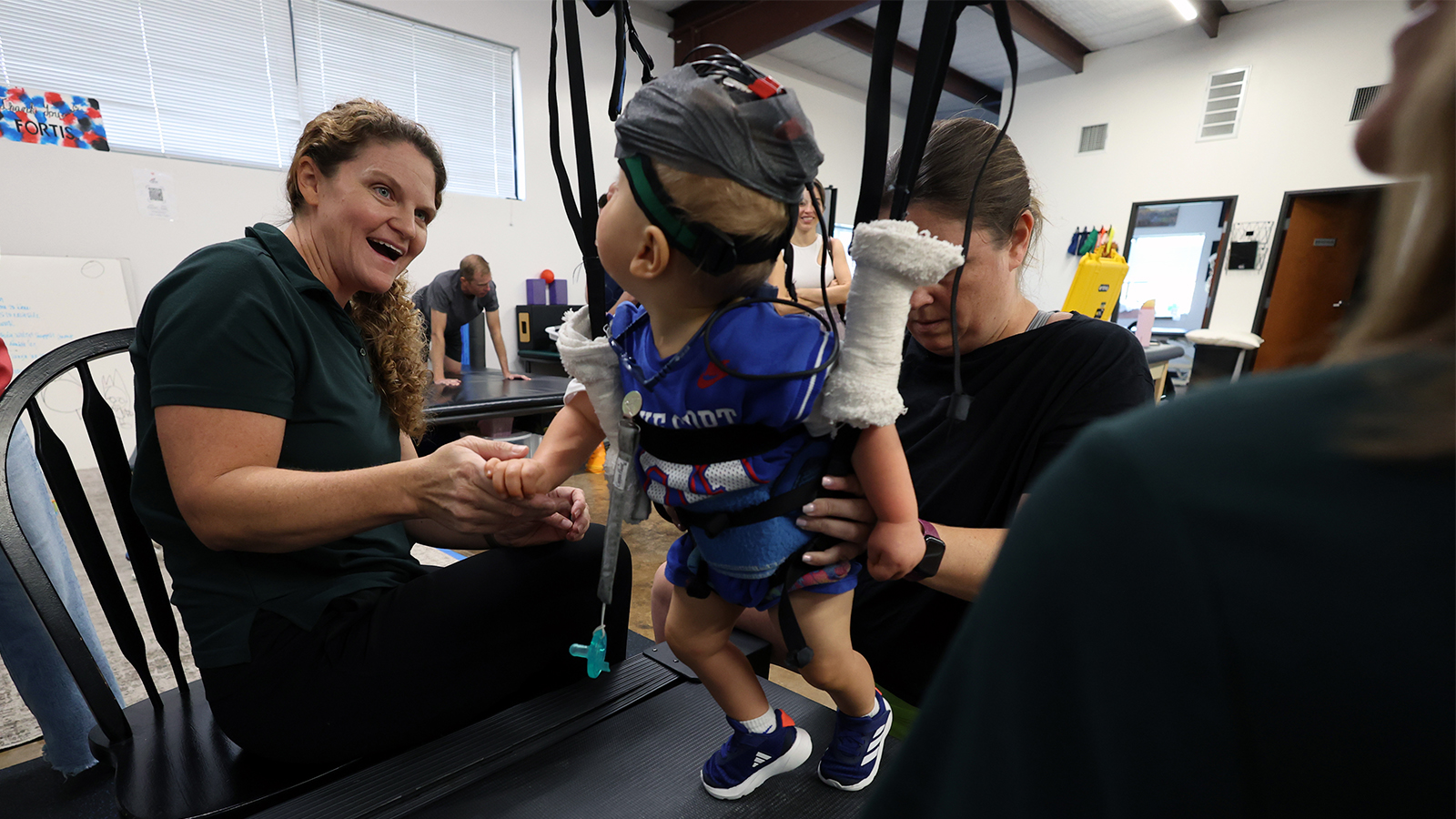
Elizabeth Ardolino, Clinical Associate Professor of Physical Therapy (left)
Elizabeth Ardolino, PT, PhD, Megan Flores, PT, PhD, both Clinical Associate Professors in the Department of Physical Therapy, and Cory Smith, PhD, Associate Professor in the Department of Health, Human Performance, and Recreation, in Baylor University’s Robbins College of Health and Human Sciences, have received a three-year, $542,102, National Institutes of Health (NIH) Research Enhancement Award (R15) for their project, “Efficacy of Activities-Based Locomotor Training in Children with Cerebral Palsy.”
Upon a diagnosis of cerebral palsy, children need intense physical therapy interventions to challenge their nervous systems so that it can change, adapt, and improve. The team, working in collaboration with the Eunice Kennedy Shriver National Institute of Child Health and Human Development (NICHD), will evaluate the outcomes of an Activities-Based Locomotor Training (AB-LT) program compared to usual care for non-ambulatory children, aged 2 to 6 years old, with cerebral palsy. This clinical trial addresses a gap in current research, which primarily focuses on ambulatory children, more than 6 years old.
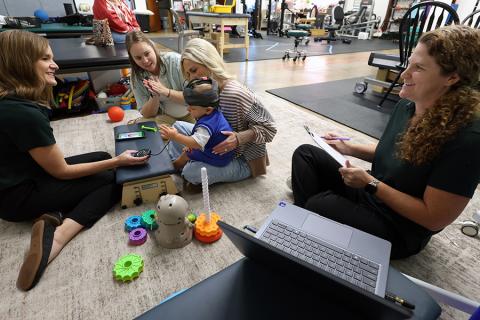
For three weeks, 19 young children will engage in partial body weight-supported treadmill training, overground functional training, and play-based activities. This intensive AB-LT training will last three hours, five days per week. Upon completion, these children will then resume their usual physical therapy care for an additional three weeks.
All outcomes will be assessed using 1) the Gross Motor Function Measure (GMFM-66) to gauge a child’s skills like lying/rolling, sitting, crawling/kneeling, standing, and walking/running/jumping, 2) functional near-infrared spectroscopy (fNIRS) to assess hemodynamic shifts in the prefrontal cortex, 3) and a Child Engagement in Daily Life (CEDL) survey completed by caregivers to describe the child’s participation in daily interactions like play and self-care.
The NIH grant enables Ardolino, Flores, and Smith to build further upon their previous research, which was funded by a Robbins College Research Award in 2024. Additionally, they are excited to introduce a mentoring component to this project, which will provide a small team of undergraduate and graduate-level students an opportunity to learn about and contribute to the rehabilitation and neuroimaging research.
Ultimately, the team aims to enhance their understanding of neuroplasticity and motor learning in young, non-ambulatory children with cerebral palsy. Their project’s finding may also advance rehabilitation strategies, potentially leading toward individualized therapeutic interventions that will improve a child’s quality of life.
“The internal funding we received through the Robbins College Research Award was instrumental in generating the pilot data that laid the foundation for this NIH R15 award,” Ardolino said. “Receiving NIH support is especially meaningful because it validates and builds upon years of research focused on improving mobility and participation outcomes for children with cerebral palsy. This funding provides the resources needed to support equipment, participant incentives, and our clinical partnerships as we continue advancing evidence-based pediatric physical therapy.”
ABOUT ROBBINS COLLEGE OF HEALTH AND HUMAN SCIENCES AT BAYLOR UNIVERSITY
Established in 2014, Robbins College of Health and Human Sciences seeks to enhance health, quality of life, and human flourishing for all individuals and communities through education, research, and innovation. It includes seven academic departments—Communication Sciences and Disorders; Health, Human Performance, and Recreation; Human Sciences and Design; Occupational Therapy; Physical Therapy; Physician Assistant Studies; and Public Health. Robbins College offers 13 bachelor’s degrees, 10 master’s degrees, and six doctoral degrees, as well as nine graduate programs in partnership with the U.S. Army. Graduate programs in Robbins College are offered in a variety of modalities, including on campus, online, and hybrid.