

Unlocking the Possibilities of Undergraduate Research
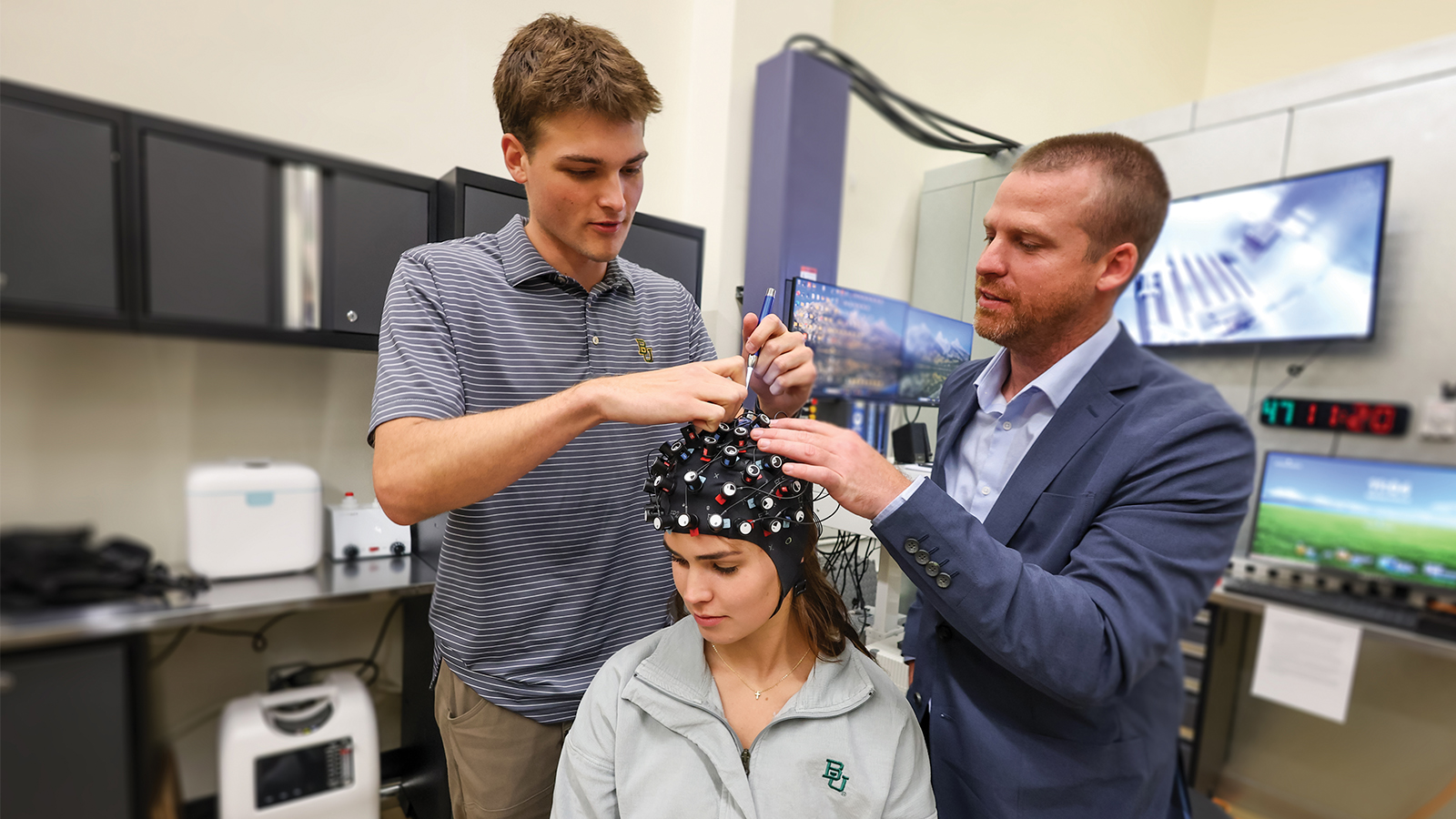
Health Science Studies senior Caden Klein (top left) and Associate Professor Cory Smith (top right)
Undergraduate research is more than an academic opportunity—it is a catalyst for discovery, confidence, and calling. In Robbins College of Health and Human Sciences, students step into labs, field sites, creative studios, and data projects and uncover new ways of seeing the world. For many, their undergraduate research experience at Baylor University is a turning point in their academic journeys and personal lives.
A Peek into the Unknown
When Baylor students take their first step into the realm of research, many are uncertain of their place in the process or how to begin. They wonder if they are even ready for an experience of this caliber.
“I initially wasn’t really interested in research,” Caden Klein, a Health Science Studies senior, said. “I’m trying to go into medicine, so I thought research wasn’t something that pertained to me. I ended up taking a recommended class that was rooted in research, and that gave me a new perspective.”
Baylor encourages hands-on inquiry, but many undergraduates imagine research as distant labs, complex theories, and experts with years of training. That gap between curiosity and action can feel wide—until one opportunity opens the door.
“Dr. [Mickey] Langlais was my professor, and one day he told me he was looking for some help with his research,” Ava McWhorter, a Child and Family Studies sophomore, shared. “This entire experience started because he was willing to let me get involved. I’m super grateful.”
Undergraduates develop practical skills, build relationships with mentors, and gain a deeper understanding of the world they hope to impact. What begins as uncertainty becomes empowerment, and research becomes not just an academic requirement but a defining chapter in their college experience.
Sparking Purpose
When students engage in hands-on research, they are learning how to ask questions, analyze problems, and contribute to solutions that matter. For many, this is the first time they feel the excitement of seeing academic ideas come to life through real people and real outcomes. Mickey Langlais, PhD, CFLE, Assistant Professor in the Department of Human Sciences and Design, has seen firsthand how undergraduate research fuels professional growth.
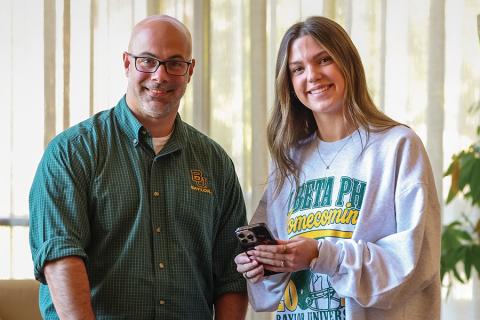
“In some of my work, we’re collaborating with families, which gives us the opportunity to interact directly with kids to learn what role technology plays in development,” Langlais explained. “Through her part in the research, Ava is learning skills that she can use to optimize the treatment that she’ll provide children in the future.”
Students like McWhorter also step into leadership roles to apply what they’ve learned in real time. They discover new strengths and gain confidence by guiding peers, facilitating team communication, and taking ownership of responsibilities.
“During my second year in Dr. Langlais’ lab, I took more of a leadership role versus actively researching,” McWhorter said. “It’s been really enlightening for me to see the leadership role of research and how I can apply that in the child life role.”
Meaningful Faculty Mentorship
Behind every student’s story is a mentor who provided opportunities to step in and contribute. Cory Smith, PhD, Associate Professor in the Department of Health, Human Performance, and Recreation, is a mentor to the students who work in his lab. His passion for how he leads stems from his own experience as an undergraduate researcher.
“When I was an undergraduate, I helped in a research lab, and that’s when I fell in love with it,” Smith explained. “It helped shape my future, as well as my perspective on the way we did research moving forward. I try to mimic that with the students that I have here.”
By fostering a lab culture rooted in support and shared purpose, student researchers feel valued and capable of achieving more than they imagined.
“Dr. Smith cares a lot about everyone in this lab. It’s a great dynamic where it doesn’t really feel like there’s a power structure—it feels like everyone’s on an even playing field,” Klein said. “He constantly looks out for opportunities and has helped me apply for scholarships tied to involvement in research. He’s always trying to help.”
Powerful Transformation
Each semester, Robbins College undergraduates step into the research environment and find themselves reshaping how they think and learn. They leave with more than findings or publications—they carry confidence, clarity, and the knowledge that their contributions matter. Most importantly, students learn that research is more than a line item on a resume. Instead, it is a moment of becoming—becoming scholars, leaders, and people who understand the power of curiosity and voice.
ABOUT ROBBINS COLLEGE OF HEALTH AND HUMAN SCIENCES AT BAYLOR UNIVERSITY
Established in 2014, Robbins College of Health and Human Sciences seeks to enhance health, quality of life, and human flourishing for all individuals and communities through education, research, and innovation. It includes seven academic departments—Communication Sciences and Disorders; Health, Human Performance, and Recreation; Human Sciences and Design; Occupational Therapy; Physical Therapy; Physician Assistant Studies; and Public Health. Robbins College offers 13 bachelor’s degrees, 10 master’s degrees, and six doctoral degrees, as well as nine graduate programs in partnership with the U.S. Army. Graduate programs in Robbins College are offered in a variety of modalities, including on campus, online, and hybrid.