

From Student to Professor: Baylor Graduates Come Home to Teach
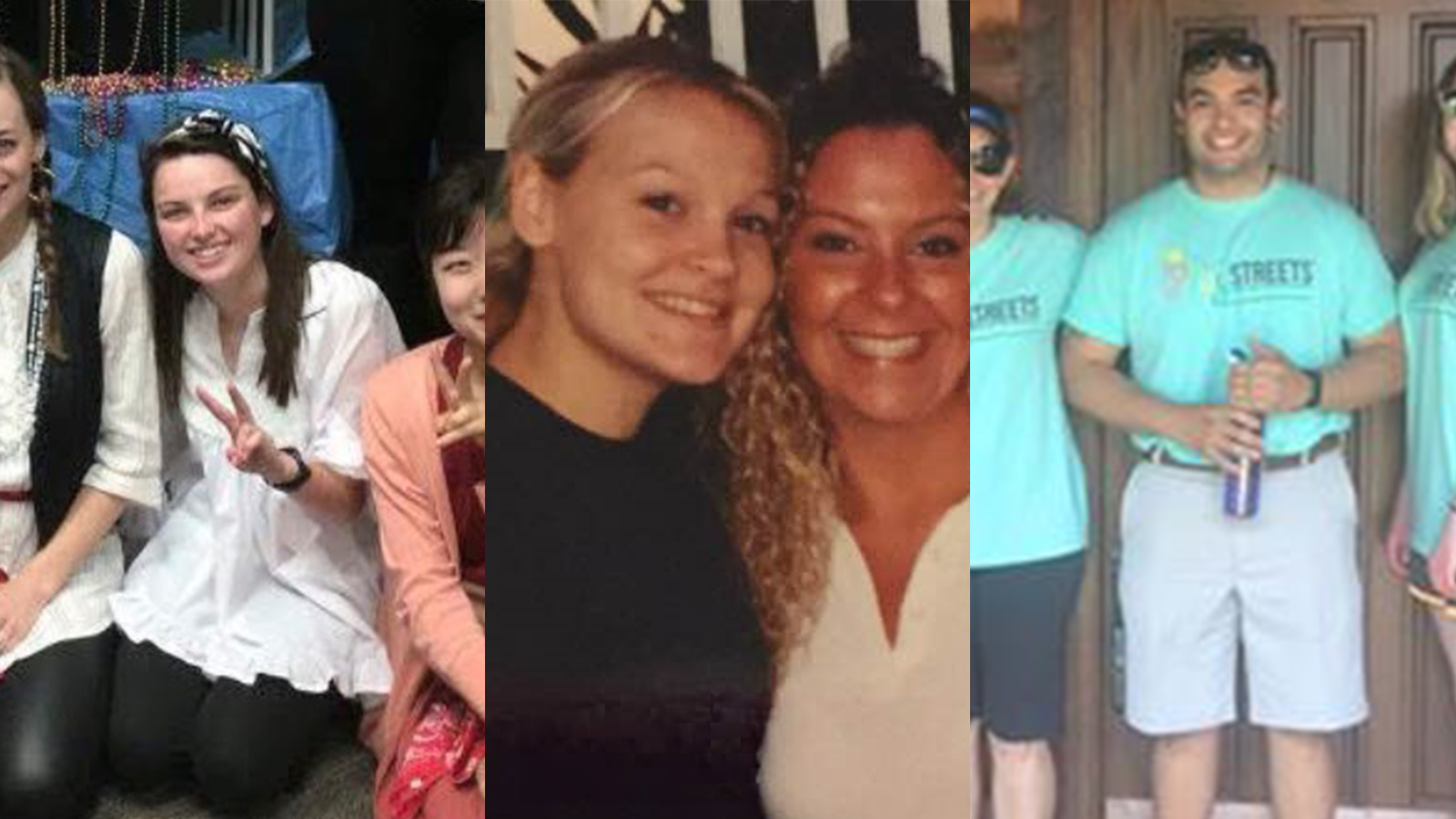
From left to right: Kacie Dolezel, Kim Smith (left), and Gabriel Benavidez during their time as Baylor University students
As the cherished song proclaims, graduates of Baylor University go off to "fling their green and gold afar." However, occasionally, Baylor alumni choose to fling their green and gold nearby. In Robbins College of Health and Human Sciences, faculty members Gabriel A. Benavidez, PhD, (MPH '19) Assistant Professor in the Department of Public Health, Kacie Dolezel, CCC-SLP, (BA '15, BS '17) Clinical Assistant Professor in the Department of Communication Sciences and Disorders, and Kimberly M. Smith, EdD, (BSEd '03) Clinical Assistant Professor in the Department of Health, Human Performance, and Recreation, have all chosen to make their alma mater home. These three professors are enriching the Baylor experiences of the students they teach by drawing on their own impactful years as students of the University.
Thinking back to your time as a student at Baylor, what is one experience that is still impacting you today?
DOLEZEL: "During my undergraduate and graduate studies in Communication Sciences and Disorders from 2011 to 2017, I developed meaningful relationships with my graduate cohort and with faculty who invested deeply in my professional and personal growth. Receiving intentional mentorship from the CSD faculty shaped both my preparation for the profession and my passion for language and literacy. Those experiences continue to influence how I approach mentorship and collaboration today."
BENAVIDEZ: "Well, a very easy one that is still impacting me today is meeting my wife at Baylor. We were both MPH students at the time and went on to pursue further schooling together, but had I not made the decision to come to Baylor, I would not have met her. Another Baylor‑specific experience that had a lasting impact on me was working with Dr. Ylitalo and Dr. Umstattd Meyer. They were the first faculty members to involve me in research projects, and that experience was so transformational that it solidified my desire to become a public health researcher. Their mentorship set me on the trajectory that ultimately led me to earn my PhD in epidemiology."
SMITH: "We used to have Health Science Studies and Health Fitness Studies (which morphed into Athletic Training). Anyways, both of these were housed in HHPR and led by Dr. Rusty Pippen, and both required students to take a course to become a certified Emergency Medical Technician. After that certification, I was able to fine-tune my clinical skills with Rural Metro Ambulance, where I worked part-time until I graduated in 2003. That was impactful because I still use those skills when we offer pop-up clinics on the Health Science Studies Study Abroad programs I lead in Belize and Costa Rica. Additionally, I met my best friend in the EMT course in 2001, and we still talk once a day to this day!"
How does your student experience inform your approach as a teacher?
SMITH: "I felt seen, heard, and accepted by my peers and professors as a pre‑health student at Baylor. The Health Science Studies major wove together human wellness, holistic health, and the essential medical school prerequisites, creating a pathway that felt both rigorous and deeply aligned with who I wanted to become. Now, as a faculty member, I hope to offer students that same sense of belonging while helping them build a strong, holistic foundation for their journey toward becoming Christian healthcare providers."
DOLEZEL: "Because of the strong leadership and mentorship I experienced as a student, I am passionate about creating the same supportive and engaging environment for my own students. Teaching Community Engagement and Service-Learning as well as Speech Sound Disorders at the undergraduate and graduate levels allows me to mentor students across different stages of their academic journey. I find great fulfillment in building relationships with students and helping them discover their strengths and professional passions as they develop their personal skills needed for their future careers."
BENAVIDEZ: "From a mentorship perspective, the faculty at Baylor invested an incredible amount of time and care in me as a student, and that experience directly informs the way I teach and mentor today. I believe I owe it to every student to care for them just as much as I felt cared for. My student experience at Baylor is what I strive to replicate for all of my future students."
Why did you want to return to Baylor in a faculty role?
BENAVIDEZ: "Baylor truly feels like home. My wife and I met here, and the faculty in this department were the best mentors I could have asked for. I knew Baylor would be a safe and caring environment in which to begin my career as a faculty member. I have a vested interest in the well‑being of this department and its students because of what Baylor did for me, and I want to be able to give that same experience to others."
SMITH: "Baylor faculty have impacted my beliefs of innovation and creativity, as well as showed me what a Christian role model could look like. Specifically, I think of Dr. Ron Wilson and Dr. Loen Irons. The pathway to a career in healthcare can be long and difficult. Returning to Baylor, it is my passion to uncover how resilience and mental toughness, cultivated through leadership and service experiences, contribute to doctoral persistence among healthcare students, and to use these insights to strengthen our Health Science Studies undergraduate preparation so students enter professional programs as competitive applicants. Sic 'em!"
DOLEZEL: "Baylor's mission and commitment to faith integration drew me back to campus as a faculty member. Returning to Baylor has allowed me to grow not only as an educator, but also as a Christian, while contributing to a community that values academic excellence, service, and purposeful mentorship. Being back in Waco and at Baylor is such a joy!"
ABOUT ROBBINS COLLEGE OF HEALTH AND HUMAN SCIENCES AT BAYLOR UNIVERSITY
Established in 2014, Robbins College of Health and Human Sciences seeks to enhance health, quality of life, and human flourishing for all individuals and communities through education, research, and innovation. It includes seven academic departments—Communication Sciences and Disorders; Health, Human Performance, and Recreation; Human Sciences and Design; Occupational Therapy; Physical Therapy; Physician Assistant Studies; and Public Health. Robbins College offers 13 bachelor’s degrees, 10 master’s degrees, and six doctoral degrees, as well as nine graduate programs in partnership with the U.S. Army. Graduate programs in Robbins College are offered in a variety of modalities, including on campus, online, and hybrid.