

Public Health Researcher Receives NIH Grant to Improve Cancer Surveillance in Texas Using AI
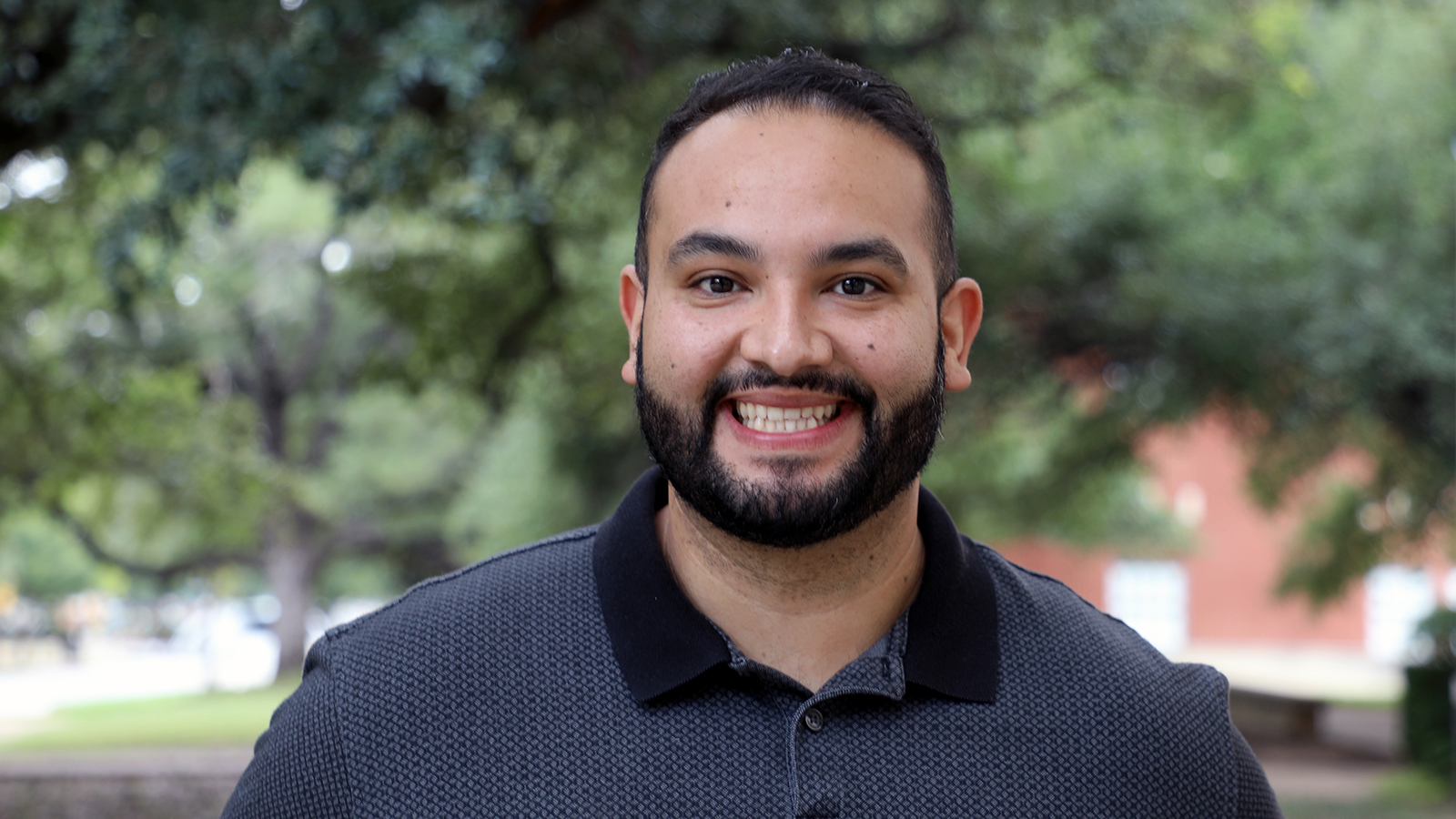
Gabriel A. Benavidez, Assistant Professor of Public Health
Cancer surveillance in the United States has mainly relied on county-level data to track where cancer occurs and understand its impact on communities. However, county boundaries don’t always provide researchers with enough detail to determine where cancer prevention and control resources are needed most.
Gabriel A. Benavidez, PhD, Assistant Professor in the Department of Public Health at Baylor University, is working to address these limitations through a new research project supported by a two-year, $168,839, Small Research Grant (R03) from the National Institutes of Health (NIH).
Benavidez’s project, “Refining Small-Area Cancer Surveillance Through AI-Driven Spatial Clustering,” will work with the Texas Cancer Registry to develop and test new geographic reporting boundaries using machine learning methods.
It is designed to addresses two challenges that can arise when cancer data is reported at the county level:
- In rural counties with smaller populations, there may be so few cancer cases that the data cannot be reported without risking patients’ privacy. While this protection is important, limited data can make it harder for researchers and public health officials to understand the full impact of cancer on these communities.
- In large urban counties, like Harris County, Texas, the geographic area can be so large that county-level statistics may not reveal which specific communities are experiencing the greatest burden of cancer, and it can be difficult to identify where to allocate resources to cancer prevention and control efforts.
Benavidez’s approach is to address both challenges by creating new geographic boundaries that are more tailored toward the populations being studied rather than relying on existing county boundaries.
“We will work with the Texas Cancer Registry to test novel methods for creating new geographic reporting boundaries that may help address both of these problems,” he said.
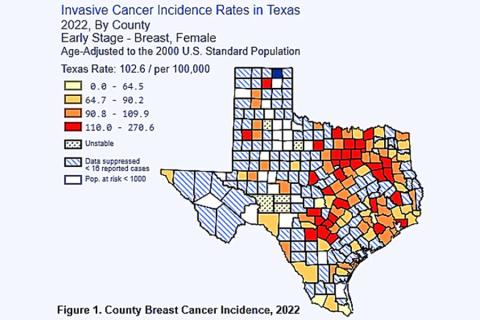
The project will use Geographic Artificial Intelligence, or GeoAI, which applies artificial intelligence with Geographic Information Systems (GIS) to analyze geographic data. Benavidez will use these methods along with population, demographic, and cancer data to develop new reporting areas.
The goal of creating new reporting areas is to reduce data suppression in rural communities while also providing geographic detail in urban areas. The approach could give public health agencies a clearer understanding of where cancer burden is significantly concentrated and help them better direct prevention and control resources.
"I’m hoping this new approach will give us a better picture of the burden of breast, colorectal, and lung cancer in rural Texas, where data are often limited or suppressed,” Benavidez added.
The idea for this research grew from Benavidez’s experiences studying rural health. During his doctoral training, he worked at a research center funded by the Federal Office of Rural Health Policy, where he focused on measuring the burden of disease throughout rural communities in the U.S.
“We constantly ran into issues of data suppression or simply having not enough good data to estimate disease prevalence accurately,” he recalled.
Although Benavidez had encountered problems throughout his research, he hadn’t previously focused on finding a way to address them. As he explored the issue further, he reached out to Texas Tech University geography professor, Tony Wang, PhD, who specializes in the use of GeoAI and high-performance geospatial computing. Those conversations eventually led to the development of the NIH grant proposal that was recently awarded.
Benavidez opted to focus particularly on breast, colorectal, and lung cancer because each of these presentsopportunities for intervention through prevention, screening, or early detection. Breast and colorectal cancers have established screening methods, while lung cancer screening is available for people at higher risk.
“Screening means we can actually intervene,” he said.
Benavidez hopes his NIH study will give public health agencies a more detailed understanding of where the cancer burden is and help them in directing prevention and control resources where they are needed the most. If successful, the project could eventually extend beyond Texas.
“I am most excited to see if our new approach is successful because it may be able to be implemented across other cancer registries throughout the nation,” Benavidez said.
ABOUT ROBBINS COLLEGE OF HEALTH AND HUMAN SCIENCES AT BAYLOR UNIVERSITY
Established in 2014, Robbins College of Health and Human Sciences seeks to enhance health, quality of life, and human flourishing for all individuals and communities through education, research, and innovation. It includes seven academic departments—Communication Sciences and Disorders; Health, Human Performance, and Recreation; Human Sciences and Design; Occupational Therapy; Physical Therapy; Physician Assistant Studies; and Public Health. Robbins College offers 13 bachelor’s degrees, 10 master’s degrees, and six doctoral degrees, as well as nine graduate programs in partnership with the U.S. Army. Graduate programs in Robbins College are offered in a variety of modalities, including on campus, online, and hybrid.