

A New Kind of Neighborhood
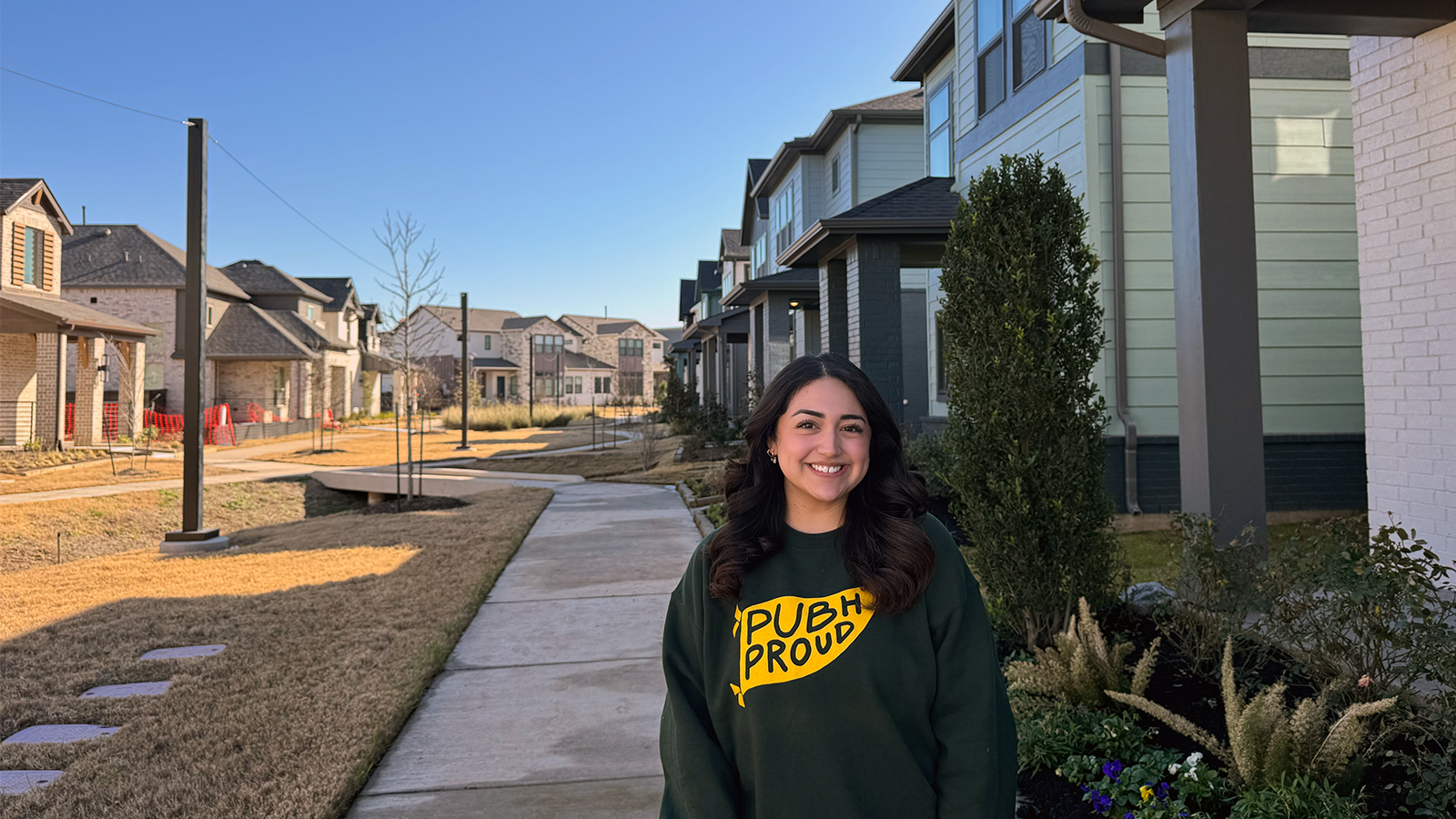
Public Health graduate student Serena Enriquez
Photo courtesy of Jacqueline Vigil
When it was time to choose her summer practicum experience for the Master of Public Health (MPH) program, Serena Enriquez consulted with her mentor, Renée Umstattd Meyer, PhD, MCHES, FAAHB, Professor in the Department of Public Health and Robbins College of Health and Human Sciences’ Senior Associate Dean of Research and Graduate Education. Umstattd Meyer connected her to The Neighborhood & Health Study—an ongoing research project by Baylor University, Texas A&M University, and Texas A&M AgriLife Research, co-led by Umstattd Meyer and Texas A&M professors Jay Maddock, PhD, FAAHB, and Alexandra MacMillan Uribe, PhD—that examines health outcomes in agriculturally focused neighborhoods, or “agrihoods,” comparing them to traditional communities in Fort Bend County, Texas. This was a new opportunity and experience for Enriquez, who had not examined the intersection of agriculture and health before.
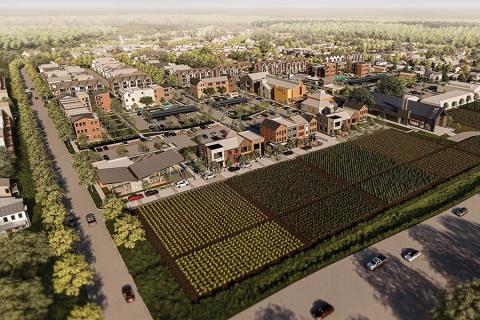
The focus of the study, the Indigo Community agrihood, spans 42 acres and emphasizes local food access from the farmland within the community, walkability, and social connection. Residents can visit the farmers market to purchase fresh food grown right in their own backyard, enjoy walking paths, and gather in the shared Filling Station, a general store and café—all with the goal of fostering healthier lifestyles.
Enriquez’s responsibilities in the study included recruiting participants and assisting with surveys, as well as observing biometric screenings and training residents on wearable devices that track physical activity. These interactions informed the development of a guide for focus groups designed to capture residents’ experiences beyond agriculture, including social and community aspects. Enriquez also created a community report template to help Indigo evaluate success using baseline data collected during the summer—tools that will guide future decisions for both community wellness and organizational growth.
“I loved the collaboration and community aspect of the project,” she shared. “It was exciting to connect with people and see the great work happening just a few hours away from Baylor.”
Enriquez hopes the study will highlight the benefits of agrihoods and provide actionable insights for improving community health. The practicum experience strengthened her technical skills while deepening her ability to collaborate with communities—an essential balance for public health professionals. She also discovered a personal interest in the relationship between nutrition, environment, and human health and hopes to bring these new insights into her future career.
Looking ahead after her graduation in May 2026, Enriquez plans to attend medical school and work with underserved populations. With her background in public health, she wants to serve as a medical provider who understands the broader factors influencing health and who can help patients take practical steps toward achieving their full potential.
“This experience makes my education more well-rounded,” she said. “I think it will set me apart as a physician who can offer both medical care and health education.”
ABOUT ROBBINS COLLEGE OF HEALTH AND HUMAN SCIENCES AT BAYLOR UNIVERSITY
Established in 2014, Robbins College of Health and Human Sciences seeks to enhance health, quality of life, and human flourishing for all individuals and communities through education, research, and innovation. It includes seven academic departments—Communication Sciences and Disorders; Health, Human Performance, and Recreation; Human Sciences and Design; Occupational Therapy; Physical Therapy; Physician Assistant Studies; and Public Health. Robbins College offers 13 bachelor’s degrees, 10 master’s degrees, and six doctoral degrees, as well as nine graduate programs in partnership with the U.S. Army. Graduate programs in Robbins College are offered in a variety of modalities, including on campus, online, and hybrid.