

Navigating New Waters
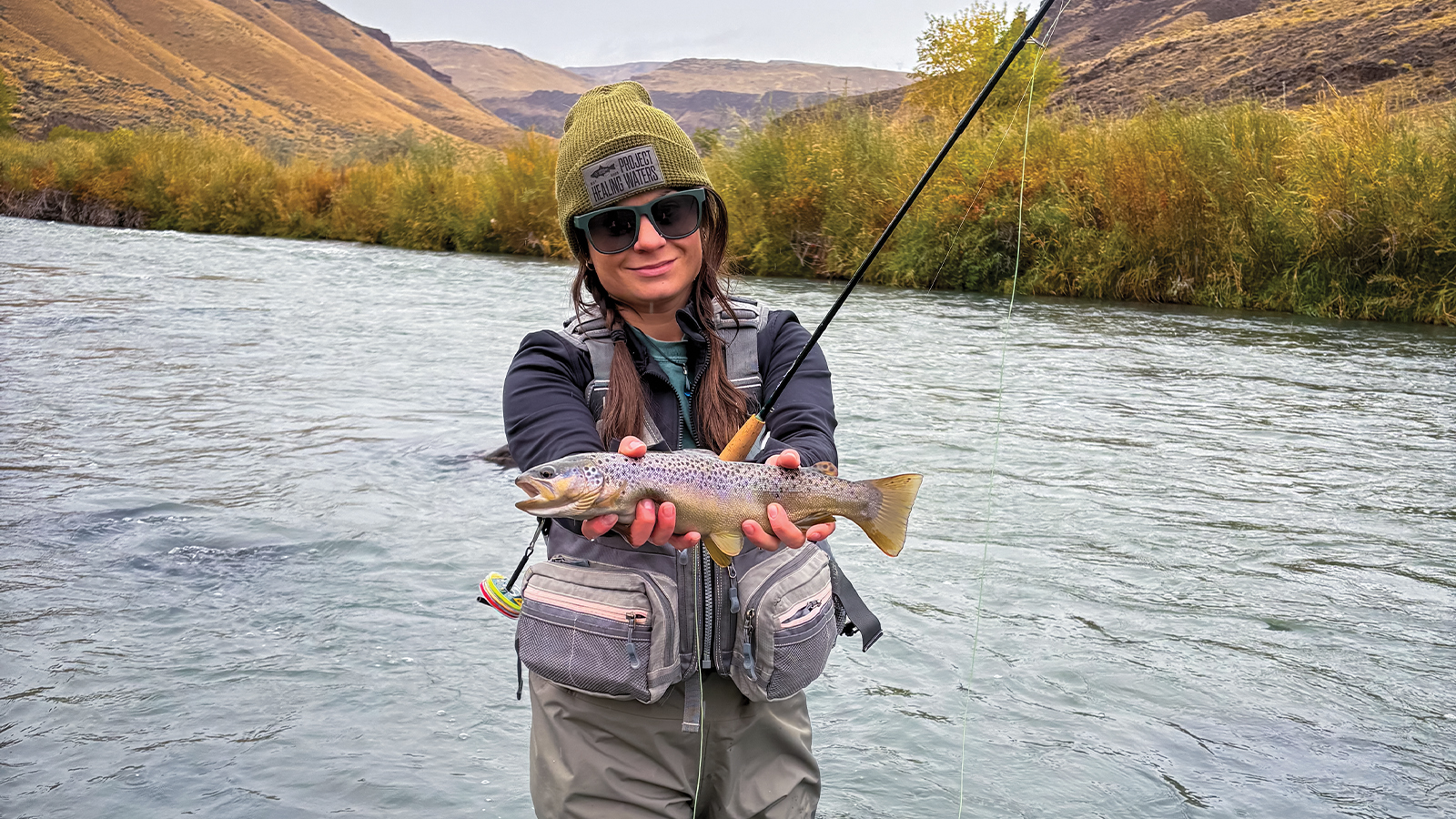
Shandy Simpson, Doctor of Occupational Therapy alumna
Photo courtesy of Shandy Simpson
When designing her doctoral capstone—a project and 14-week mentored experience that culminates the Doctor of Occupational Therapy (OTD) degree—recent Baylor University graduate Shandy Simpson, OTD, OTR, wanted to explore a topic both personally meaningful to her and underrepresented in occupational therapy research. She chose to partner with Project Healing Waters in Boise, Idaho, a national nonprofit organization dedicated to supporting American veterans through the therapeutic practice of fly fishing.
As a Marine Corps veteran, Simpson can personally attest to the difficulty of separating from the military. While she enjoyed her service, her role working on electrical systems of F/A-18 aircraft did not align with her greatest strengths—empathy, compassion, and a love for working with people.
In time, Simpson discovered occupational therapy, a healthcare profession that helps people engage in meaningful daily activities. She immediately knew it was a perfect fit.
“Occupational therapy treats the holistic person,” she said. “It combines all the elements that make us who we are: our passions, our needs, and our wants. Occupational therapists can work with people on all these parts of themselves.”
While Simpson felt strongly called to pursue her OTD degree, the transition to civilian life was deeply challenging, and she felt a sense of loss and a longing to find the kinship she once had.
“It felt a lot like I was leaving a family that I didn’t get to go back to. On base you could walk into the store, or chow hall—and even if you did not know someone—you knew you had something in common with them. We had this banter and shared sense of humor that populations outside of the military would not understand,” she shared.
Organizations like Project Healing Waters address this hardship and provide spaces for veterans to come together, enjoy a shared activity, and rebuild a sense of camaraderie. Fly fishing, in particular, is a peaceful, focused activity that engages a person both physically and mentally.
Through her capstone, Simpson examined how peer led recreational activities can help develop a sense of purpose, achievement, and social connectedness among veterans. She surveyed veterans before and after their fly fishing outings to assess its impact on their occupational engagement.
“Leisure activities are some of the most important parts of who a person is,” she explained. “Recreation, like fly fishing, provides a healthy method to relax and feel achievement so they can return to everyday tasks like yard work or their job with a sense of satisfaction.”
Simpson hopes her project will advance occupational therapy research focused on outdoor recreation for veterans and inspire more innovative, nature-based treatment settings beyond traditional clinical environments. As for her own advancement, Simpson celebrated her graduation from the Baylor OTD program in Fall 2025 and is now pursuing a career that will allow her to work directly with people, especially veterans, to help them rediscover purpose and fulfillment in their everyday lives—exactly what first inspired her to pursue occupational therapy.
ABOUT ROBBINS COLLEGE OF HEALTH AND HUMAN SCIENCES AT BAYLOR UNIVERSITY
Established in 2014, Robbins College of Health and Human Sciences seeks to enhance health, quality of life, and human flourishing for all individuals and communities through education, research, and innovation. It includes seven academic departments—Communication Sciences and Disorders; Health, Human Performance, and Recreation; Human Sciences and Design; Occupational Therapy; Physical Therapy; Physician Assistant Studies; and Public Health. Robbins College offers 13 bachelor’s degrees, 10 master’s degrees, and six doctoral degrees, as well as nine graduate programs in partnership with the U.S. Army. Graduate programs in Robbins College are offered in a variety of modalities, including on campus, online, and hybrid.