

Meet Baylor’s First Neurologic Physical Therapy Resident
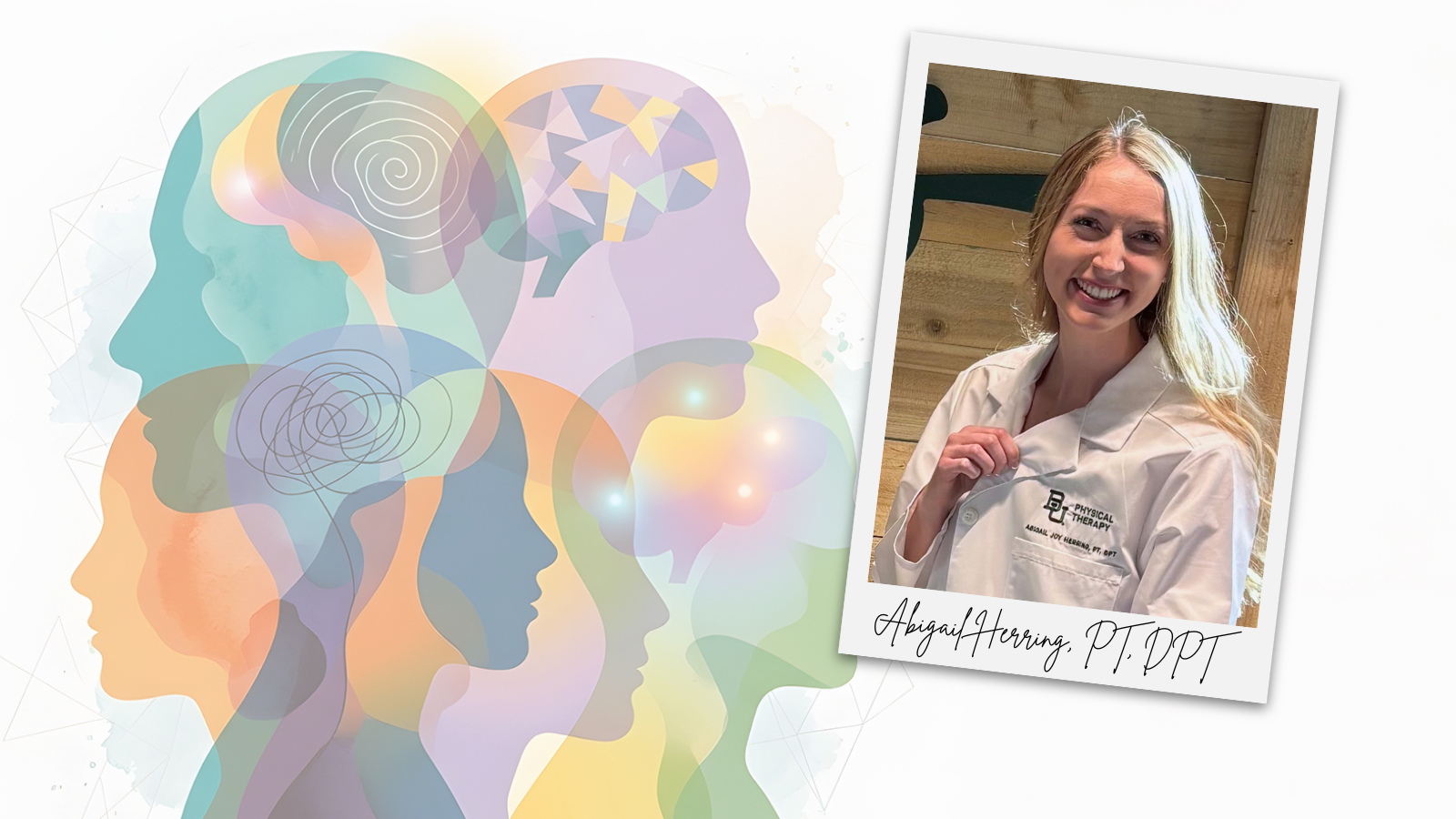
As Baylor University’s first neurologic physical therapy resident, Abigail Herring, PT, DPT, is developing specialized clinical skills and mentoring future physical therapists, as well as learning to help patients navigate complex neurological conditions.
An Initial Spark
For Herring, physical therapy became more than an academic interest when a patient she worked with during Baylor’s Doctor of Physical Therapy (DPT) program accomplished something he had struggled to do since experiencing a stroke.
Working alongside her classmates, Herring developed a treatment plan for an older man who really wanted to regain the ability to get on and off the ground while still working on his ranch. Because he used an ankle-foot orthosis, an external brace that supports the lower limb to assist with walking, his mobility presented a unique challenge. Through their session together, Herring taught him a floor-transfer technique that was accommodated toward his needs.
She recalls the patient told her, “I have been to this patient experience a couple times, and I have never been able to do this.”
For Herring, that moment offered a close glimpse into the impact of neurological physical therapy and helped solidify her interest in this specialty.
Throughout her DPT studies, she was particularly drawn to neuroscience and neuromuscular studies, particularly how injuries affecting the brain, spinal cord, and peripheral nerves can produce different challenges for each patient. Her final clinical rotation in inpatient rehab—allowing her to work alongside other physical therapists specializing in neurological conditions, such as strokes, spinal cord injuries, and traumatic brain injuries—further shaped her career goals.
“Without a doubt, I knew I wanted to treat that population and have the specialized knowledge to invoke restorative lasting change,” she said.
Residency’s Meaningful Lessons
Herring’s experience with Baylor DPT faculty had shown her the difference knowledgeable, compassionate clinicians can make in patients’ lives. So, when a professor encouraged her to apply for the new Baylor Scott & White-Baylor University Neurological Residency, she didn’t hesitate.
She became its inaugural resident in March 2026.
This yearlong residency is designed to build on the education that physical therapists tend to gain in graduate school. Through intensive specialized coursework, clinical experience, and regular mentorship, residents improve their treatment techniques, strengthen clinical reasoning, and apply evidence-based practices to patient care.
For Herring, these opportunities have also introduced a new dimension to her professional interests: teaching.
Balancing full-time patient care with mentorship, coursework, research, and teaching requires precisely consistent dedication. Her weekly schedule contains numerous clinical responsibilities, individual mentorship sessions with Baylor faculty, and specialist course material. She also teaches at DPT lab immersions, along with developing case studies and participating in neurological physical therapy presentations.
Teaching has certainly helped Herring recognize how much she genuinely appreciates connecting classroom concepts with additional real-world clinical practice. It also allows her to continue developing her own understanding while trying to support DPT students as they work through challenging material.
The residency's most meaningful lessons, however, have often emerged from very complex patient cases.
While treating patients in intensive care and inpatient rehabilitation, Herring has learned to really adapt her approach, collaborating across distinct medical disciplines, along with recognizing when to seek guidance from different experienced mentors. Caring for medically complex patients has deeply reinforced the importance of communication among many different healthcare professionals, particularly when the conditions of patients change so rapidly.
One experience involved helping a patient with a progressive brain tumor maintain mobility while preparing for a safe transition home. The case required careful assessment, coordination with other members of the medical team, and training for the patient’s family.
Through that experience, Herring discovered the profound impact physical therapists can have beyond the clinical setting.
“I realized that rehabilitation is not solely about improving movement. It can truly help patients and families navigate various difficult circumstances as well as pursuing meaningful goals together,” she shared.
These experiences have strengthened Herring’s clinical skills and prepared her to work with diverse patient populations while developing as an educator and leader. They have also reinforced her understanding that professional growth continues throughout a physical therapist’s career.
“I have come to accept that I will always be learning,” she said.
Looking Forward
As her residency approaches its conclusion, Herring has not yet determined where her career will take her next—but she is excited for whatever is to come. Although she has valued her time in Waco and the friendships she has developed with fellow Baylor physical therapy residents, she anticipates beginning a new chapter closer to family and hometown friends.
Whether her next opportunity leads her to Arkansas, Colorado, or somewhere in between, Herring is certain she wants to continue her growth in neurologic physical therapy. For now, Baylor’s residency is representing an important step toward a career focused on clinical excellence, compassionate care, and helping others reach their full potential.
ABOUT ROBBINS COLLEGE OF HEALTH AND HUMAN SCIENCES AT BAYLOR UNIVERSITY
Established in 2014, Robbins College of Health and Human Sciences seeks to enhance health, quality of life, and human flourishing for all individuals and communities through education, research, and innovation. It includes seven academic departments—Communication Sciences and Disorders; Health, Human Performance, and Recreation; Human Sciences and Design; Occupational Therapy; Physical Therapy; Physician Assistant Studies; and Public Health. Robbins College offers 11 bachelor’s degrees, 10 master’s degrees, and six doctoral degrees, as well as nine graduate programs in partnership with the U.S. Army. Graduate programs in Robbins College are offered in a variety of modalities, including on campus, online, and hybrid.