

A Look Inside Baylor’s Master of Athletic Training Program
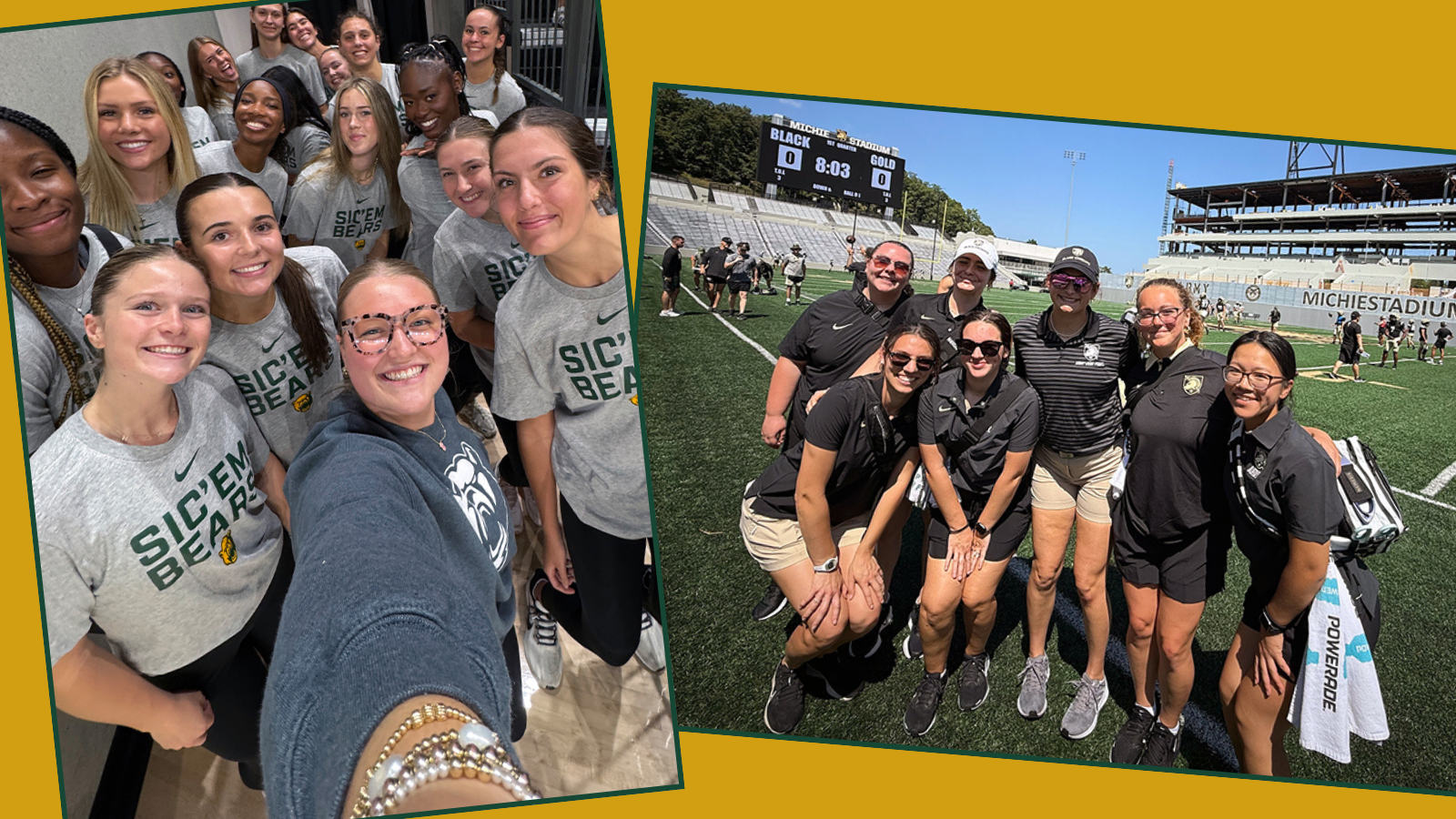
From classrooms to training rooms, Baylor University’s Master of Athletic Training (MAT) students spend their days preparing for the realities of a fast-paced healthcare profession. By following one first-year student and one second-year student through a typical day, a clear picture emerges of how the program builds students’ knowledge, confidence, and clinical skills.
First-Year Focus: Emily‑Grace Ingle
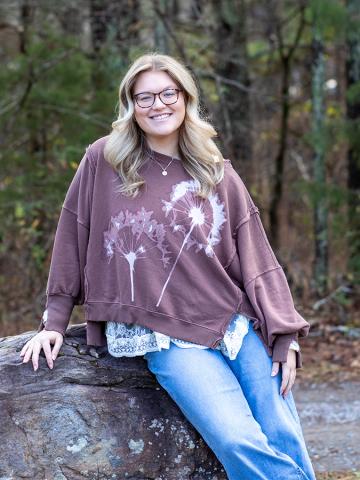
First-year MAT student Emily‑Grace Ingle was inspired to pursue athletic training after working as a student athletic trainer at her high school’s football games. Entering the program, she was set on working with NFL or collegiate football teams, but the variety of clinical experiences she has encountered at Baylor has broadened her interests.
Ingle’s academic schedule includes classes on Mondays and Wednesdays from 8:30am to 2:00pm, with the rest of the week dedicated to clinical hours. Her current coursework includes Evaluation and Diagnosis in Athletic Training III, which focuses on evaluative procedures related to the head and spine, as well as general medicine conditions involving the respiratory, cardiovascular, and neurological systems, and Therapeutic Interventions II, an introduction to modalities such as ultrasound, electrical stimulation, and diathermy.
Clinical assignments rotate every five to seven weeks, allowing students to experience a range of healthcare settings—from high schools to Baylor Athletics to physician offices. Ingle is currently placed in a physician’s office, splitting her day between the musculoskeletal (MSK) clinic in the morning and general medicine in the afternoon.
“Baylor MAT does this fast turnaround on clinics strategically, so we can adapt to different clinical settings quickly,” she explained. “That adaptability is a skill in itself.”
In the MSK clinic, Ingle works with patients managing acute and chronic injuries, closely aligning with her athletic training studies. In general medicine, she encounters patients ranging from infants to adults, exposing her to healthcare conditions outside her formal coursework and expanding her clinical perspective. Her favorite part of the day is during clinical hours, when her preceptor empowers her to evaluate patients independently.
One particularly meaningful moment occurred when a patient came in frustrated and in significant pain after undergoing numerous diagnostic tests without a clear diagnosis. During the evaluation, Ingle sensed the patient’s emotional distress and took time to have a meaningful conversation beyond her physical pain.
“To meet as two humans instead of patient and practitioner was really special,” she shared.
Outside of class and clinic hours, Ingle prioritizes self-care through intentional quiet time, Bible study, and rest. On weekends, she decompresses by cooking meals for herself and watching lighthearted shows.
Second-Year Perspective: Megan Nachison
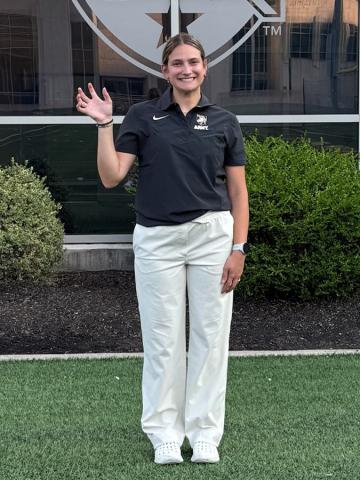
Second-year MAT student Megan Nachison was drawn to athletic training after her own experiences as a student-athlete. Having competed in field hockey, softball, and wrestling, she relied heavily on her athletic trainer following injuries and began to see the profession as her future.
Nachison’s class days are Tuesdays and Thursdays in the mornings, leaving the rest of the week open for clinical work. Her current placement is at a local high school, where she works with athletes across several spring sports. As she enters her final semester, her coursework focuses on board exam preparation and post-graduate readiness. She is also completing a group research project examining concussion protocols within the Southwest Athletic Trainers Association (SWATA).
Nachison typically wakes up at 6:55am, starting her day by reading 10 pages of a book to help focus her mind. After grabbing a snack, she either heads to class with her roommates—who are also in the MAT program—or studies before leaving for clinic.
One of her favorite parts of the day is the drive with her roommates, where they talk through their classes and notable clinic experiences. She arrives at the high school around 1:30pm, with her days ending anywhere between 4:30pm and 10:30pm, depending on practices and games.
Although Nachison hopes to work at a university or military academy in the future, she has found fulfillment in the high school setting.
“I love what I do, and I love being at the high school,” she said. “The kids really make it, and it’s a lot of fun.”
One validating moment came when she worked with a student-athlete recovering from multiple torn ankle ligaments. After limited progress, the athlete was referred to a physician. Nachison provided detailed treatment notes, and when the athlete returned, the doctor recommended continuing the same course of care.
“That felt great,” she said. “I’m still a college student, so having a doctor affirm what I was doing was really fulfilling.”
On weekends, Nachison prioritizes rest and balance by FaceTiming family, attending church, and taking a break from academics.
Prepared to Practice
Despite being at different stages in the program, both Ingle and Nachison emphasize the holistic preparation Baylor’s MAT program provides.
“Baylor prioritizes diverse learning environments and invests in you not only as a student, but as a human,” Ingle said. “The faith integration is a huge part of that—being able to practice excellent healthcare while reflecting Christ is incredibly meaningful.”
Nachison echoed that sentiment, citing Baylor’s faith-based environment and professional network as key factors in her decision to attend.
“The University offers a rare balance of strong academics, faith integration, and professional support,” she said. “Between the professors, preceptors, and alumni connections, you’re set up not just to succeed in the program, but in life after graduation.”
ABOUT ROBBINS COLLEGE OF HEALTH AND HUMAN SCIENCES AT BAYLOR UNIVERSITY
Established in 2014, Robbins College of Health and Human Sciences seeks to enhance health, quality of life, and human flourishing for all individuals and communities through education, research, and innovation. It includes seven academic departments—Communication Sciences and Disorders; Health, Human Performance, and Recreation; Human Sciences and Design; Occupational Therapy; Physical Therapy; Physician Assistant Studies; and Public Health. Robbins College offers 13 bachelor’s degrees, 10 master’s degrees, and six doctoral degrees, as well as nine graduate programs in partnership with the U.S. Army. Graduate programs in Robbins College are offered in a variety of modalities, including on campus, online, and hybrid.