

Introducing Baylor’s Faith-Integrated Marriage and Family Therapy Program
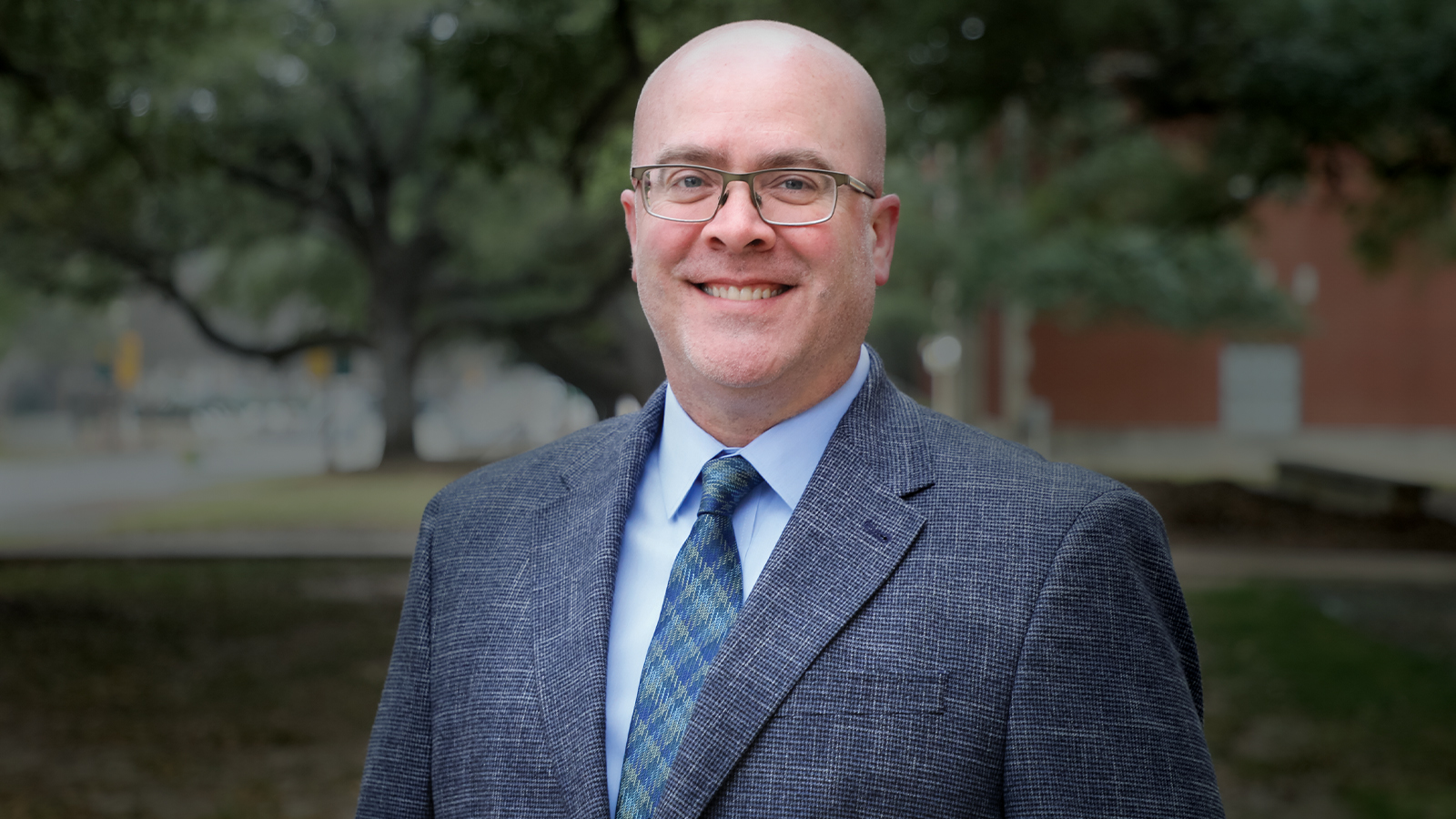
Matthew Brosi, Marriage and Family Therapy Program Director
Robbins College of Health and Human Sciences is adding a new hybrid graduate program to its offerings. The Master of Science in Marriage and Family Therapy (MFT) will welcome its first cohort in Fall 2026.
Housed in the Department of Human Sciences and Design, the MFT program will embody Baylor University’s Christian mission and offer students a unique opportunity to explore the intersection of faith and therapeutic practice. In this Q&A, inaugural Program Director Matthew Brosi, PhD, LMFT, shares an inside look into designing an intentional degree that will set Baylor apart from other programs.
“At a time when families are experiencing increasing stress and disconnection, we have a meaningful opportunity to prepare therapists who are not just trained to be competent therapists; they are invited to see their work as a vocation and to thoughtfully explore how values, meaning, and spirituality intersect with ethical clinical practice.” —Matthew Brosi, PhD, LMFT
Tell us about your interest in coming to Baylor.
My interest in Baylor really comes from how closely my own values align with Baylor’s mission, and I’m drawn to its commitment to academic excellence, strong clinical training, and the intentional integration of faith and service. That combination reflects how I approach teaching, supervision, and clinical work in my own career.
I’m especially excited about the chance to help shape something from the ground up. I care deeply about training that is relational, experiential, and grounded in a systemic perspective, and I see those priorities clearly reflected in the University’s vision for the program.
What resonates most with me is Baylor’s emphasis on forming professionals who serve others with integrity and compassion. I love the opportunity to be part of a community that takes both professional development and faith seriously, and to support students as they grow not only as clinicians, but as people who feel called to serve.
Share about the MFT profession and why it’s important for Baylor to offer this program.
Marriage and family therapy is a mental health profession that’s grounded in the idea that people are deeply shaped by their relationships and family systems. MFTs work with individuals, couples, and families from a systemic perspective, recognizing that healing often happens by strengthening relationships and restoring connection. At its core, the profession reflects the belief that family is foundational to mental health and to human flourishing.
I see Baylor’s MFT program as a unique opportunity to model what faith informed, systemic training can look like in practice. That means integrating thoughtful reflection on values, meaning, and vocation alongside solid clinical skill development. Ultimately, my hope is that Baylor graduates therapists who are well prepared for licensure and practice, and who also contribute in meaningful ways to the health and flourishing of families, communities, and the systems they serve.
What makes Baylor’s MFT program unique?
Baylor is especially well positioned to enter this space because its mission aligns so naturally with the profession’s values. At a time when families are experiencing increasing stress and disconnection, we have a meaningful opportunity to prepare therapists who are not just trained to be competent therapists; they are invited to see their work as a vocation and to thoughtfully explore how values, meaning, and spirituality intersect with ethical clinical practice.
The program is also distinctive in its intentional approach to clinical training. Students engage in hands-on learning and experiential practice with direct feedback from faculty through scheduled immersive experiences within the program, while also being supported in completing clinical training within their own communities. This model allows students to integrate learning with real-world practice, remain connected to their support systems, and serve families where they live—all while developing strong professional identity and clinical competence.
What excites you about launching this program?
What excites me most is the opportunity to build something new alongside the inaugural cohort. There’s a unique energy that comes with starting a program from the ground up, and I’m really looking forward to shaping a learning environment that reflects Baylor’s values while also responding to the realities of today’s clinical and professional landscape.
I’m especially excited about the chance to innovate—thinking intentionally about how we prepare students for the field, how we integrate strong clinical training with faith and ethics, and how we support students as they develop their professional identities as MFTs. Being able to design a program thoughtfully and intentionally, rather than step into something already established, is a rare opportunity and allows us to focus on what students truly need to succeed.
I’m also excited to learn alongside the students themselves. An inaugural cohort brings diverse experiences, perspectives, and hopes for the profession, and those voices will help shape the culture of the program.
Learn how Baylor can prepare you for a career in Marriage and Family Therapy, and apply today!
ABOUT ROBBINS COLLEGE OF HEALTH AND HUMAN SCIENCES AT BAYLOR UNIVERSITY
Established in 2014, Robbins College of Health and Human Sciences seeks to enhance health, quality of life, and human flourishing for all individuals and communities through education, research, and innovation. It includes seven academic departments—Communication Sciences and Disorders; Health, Human Performance, and Recreation; Human Sciences and Design; Occupational Therapy; Physical Therapy; Physician Assistant Studies; and Public Health. Robbins College offers 13 bachelor’s degrees, 10 master’s degrees, and six doctoral degrees, as well as nine graduate programs in partnership with the U.S. Army. Graduate programs in Robbins College are offered in a variety of modalities, including on campus, online, and hybrid.