

Fueling Community with Faith and Food
“Like good stewards of the manifold grace of God, serve one another with whatever gift each of you has received.” —1 Peter 4:10
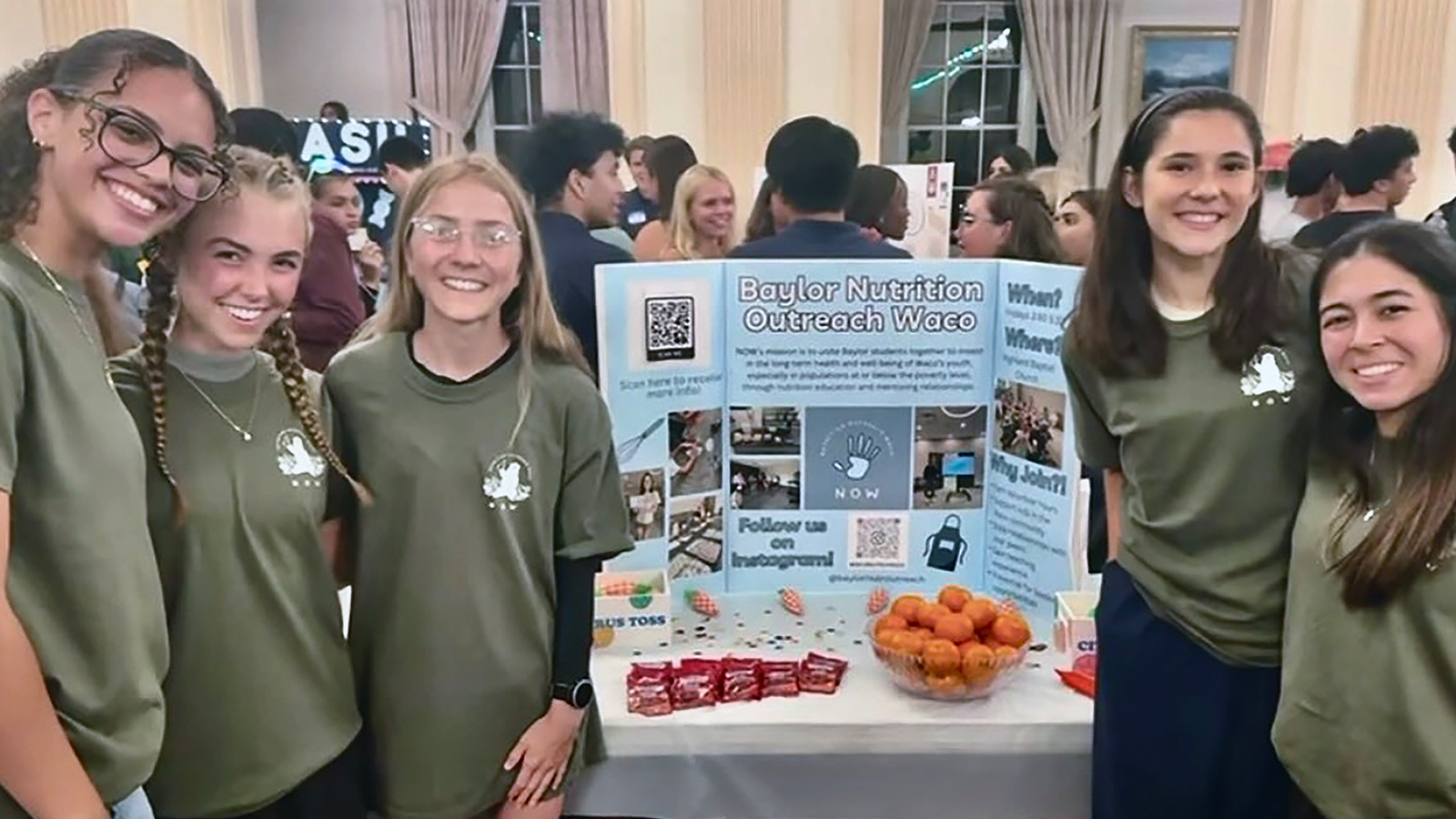
On Friday afternoons, Highland Baptist Church in Waco, Texas, comes alive with the sound of laughter, cooking, and the shuffling feet of elementary school age children eager for fun. The after-school program, offered in partnership with Baylor University’s student organization Nutrition Outreach Waco (NOW), is built on a simple belief that learning about food should be empowering, faithful, fun, and rooted in dignity.
NOW began nearly a decade ago, and today, Baylor students across many disciplines provide nutrition and fitness education to children from underserved neighborhoods across Waco. About 25 children, all enrolled in first grade through fifth grade, participate each week.
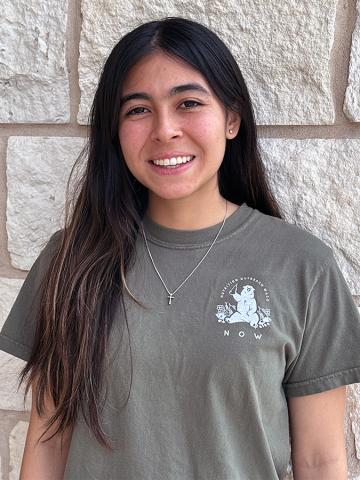
Anabelen Pons, a senior Nutrition Sciences major, joined NOW her freshman year and currently serves as an officer.
“It’s meant to equip these kids, and even their families, to be able to see that food is meant to be a source of fuel,” she said. “I really didn’t know much about nutrition growing up, but now studying nutrition, I see the importance of how you view food. We really want the kids to have a positive view of food.”
No Good or Bad Foods
NOW has focused on themes such as world food and culture, encouraging the children to explore global cuisines, cultural food traditions, and creative activities that celebrate a deepened intercultural understanding. Additionally, through a farm to fork initiative in partnership with Texas A&M AgriLife, children planted, grew, and harvested their own vegetables, learning firsthand about agricultural stewardship and sustainability. Last semester there was a focus on sports nutrition, and currently, the team is incorporating faith into the lessons.
That said, each Friday begins with a simple icebreaker: “What are you thankful for today?” Then, the children move into hands‑on learning, which often includes activities that anchor nutrition concepts in movement.
“All food in moderation and balance is part of a healthy diet. There’s no good food or bad food,” Pons said. “In the end, what we eat is how we are able to honor God because it gives us energy to serve others. So, why would we look at it in a wrong way?”
Everyone’s favorite part of the program is the cooking session. Baylor students help the children prepare a weekly snack, like smoothies, energy balls, or pita bread with veggie dips. Each recipe becomes an opportunity for conversation—Why do our bodies need carbohydrates? What is special about vitamin C? How does food give us the energy to run, play, and learn?
While most students involved in NOW are Nutrition Sciences majors, they have also represented Baylor programs such as Health Science Studies, Public Health, Neuroscience, Education, Biology, and Music. All serve side‑by‑side, applying unique classroom knowledge and building meaningful relationships across Waco’s faith, nonprofit, and business communities.
A Faithful Foundation
“My faith is very important to me, and Baylor has definitely helped to combine faith in my academics, service, and what I want to do later on with my career,” Pons said. “We all have gifts or talents. We must find how to be stewards of those gifts.”
Nutrition provides us a way to care for one another and to nourish our bodies well. For Pons, the work is deeply spiritual.
“I thought about how I can use my gifts to serve His community—and it turns out, it’s a passion that I love: food,” she said. “In finding NOW, I feel like God was just like putting the pieces all together and just directing me to it, which is really sweet.”
As she prepares to graduate from Baylor in May 2026, Pons is still envisioning how to take this calling into her future. She would love to become a registered dietitian and has been accepted into a combined Master of Public Health and Dietetic Internship program at UTHealth Houston. Ultimately, she hopes to “continue to serve and love on different communities that lack access to nutrition education.”
ABOUT ROBBINS COLLEGE OF HEALTH AND HUMAN SCIENCES AT BAYLOR UNIVERSITY
Established in 2014, Robbins College of Health and Human Sciences seeks to enhance health, quality of life, and human flourishing for all individuals and communities through education, research, and innovation. It includes seven academic departments—Communication Sciences and Disorders; Health, Human Performance, and Recreation; Human Sciences and Design; Occupational Therapy; Physical Therapy; Physician Assistant Studies; and Public Health. Robbins College offers 13 bachelor’s degrees, 10 master’s degrees, and six doctoral degrees, as well as nine graduate programs in partnership with the U.S. Army. Graduate programs in Robbins College are offered in a variety of modalities, including on campus, online, and hybrid.