

Child Life Practicum Solidifies Senior’s Calling
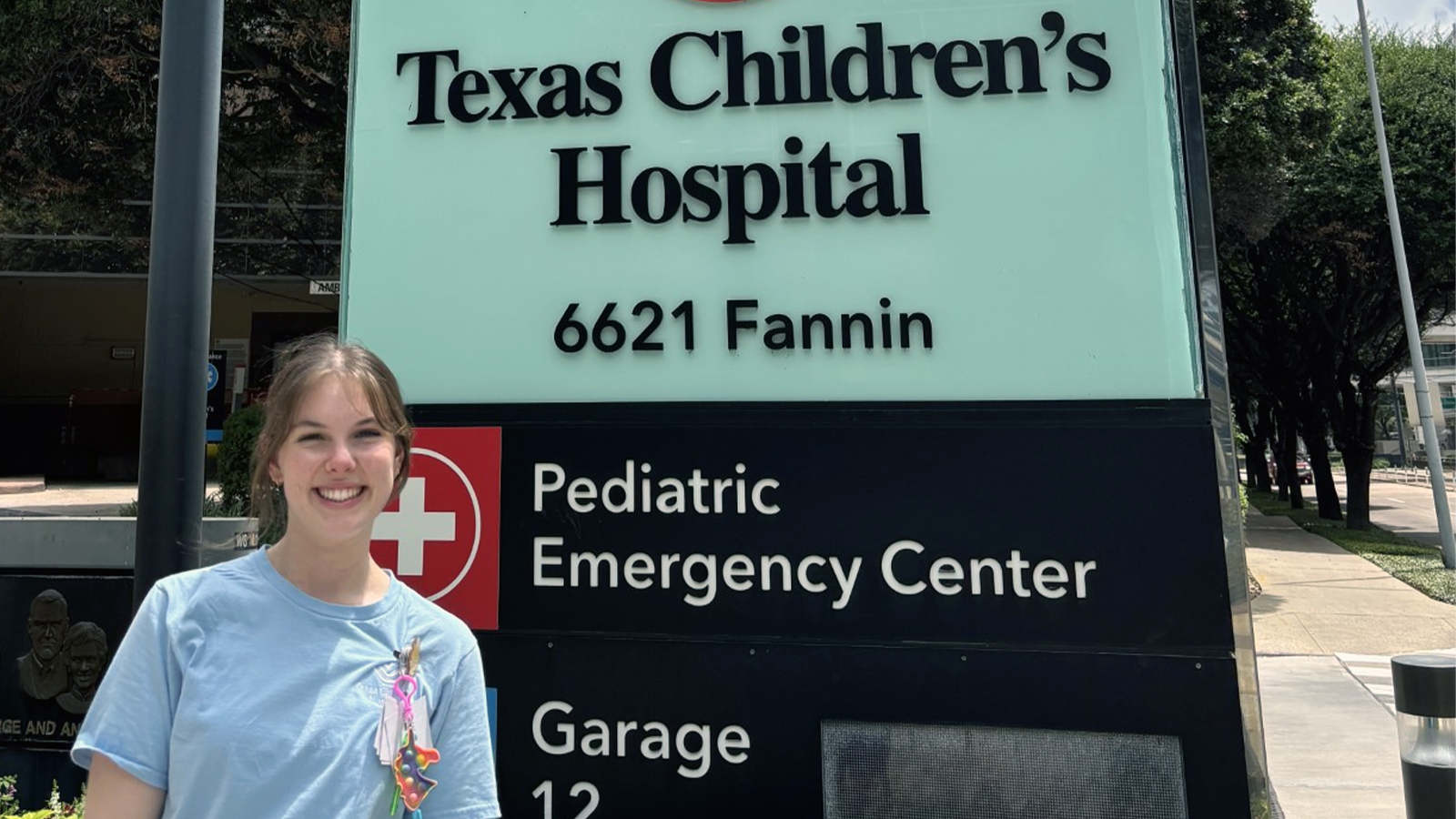
Child and Family Studies senior Harper Dorris
Life’s biggest challenges are never easy, but they can be made easier with the help of people with big hearts to walk with you through difficult seasons of life. For children who are hospitalized and dealing with such heavy circumstances, a child life specialist is often this person. These healthcare professionals aim to make this process easier—not only for the children fighting these battles, but for their families as well.
Child and Family Studies senior Harper Dorris has been taking steps toward her calling to become a child life specialist. To complete her degree’s required academic practicum, she spent a “life-changing summer” at Texas Children’s Hospital in Houston, Texas.
Her passion to become a child life specialist is inspiring in many ways. Dorris herself spent a portion of her life dealing with medical difficulties from the young age of six. During the first parts of her hospitalization, she navigated without the help of a child life specialist, and she remembers that lack of support caused even more anxiety and fear in an already formidable situation. After being assigned a child life specialist, Dorris felt the weight of medical trauma come off her shoulders.
“They were so kind, and it drastically changed the way that I thought about medicine and medical procedures,” she recalled. “Ultimately, after that point, I thought to myself that this is the thing that God called me for and put me on this earth to do.”
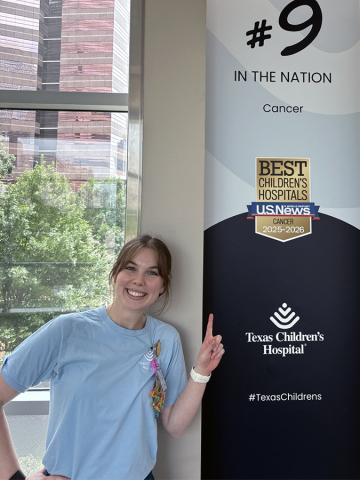
Dorris was one of three students selected to complete her practicum at Texas Children’s Hospital, extending her the opportunity to shadow and observe its Child Life Department. During this time, she experienced different avenues that the profession has to offer—she spent time in the operating rooms, inpatient cancer center, day surgery, and the neonatal intensive care unit.
Additionally, Dorris was able to implement play activities into her rotations: 1) medical art activities, which allow children to become acquainted with medical tools they will come into contact with on a regular basis, and 2) normalization play, which allows children to participate in activities that still allow them to feel a sense of normalization in their lives while spending time in the hospital.
“One of the patients loved art! So, for our medical art activity, I got a canvas and some medical supplies like medical tape, cotton balls, Q-tips, and gauze. Then, I included art supplies like watercolor paint and glitter. It was perfect for her! She got to utilize all those medical tools in a very safe and fun way to get familiar with them,” Dorris explained. “For normalization play, I implemented time for the patients to make slime and play with toy cars.”
Ultimately, Dorris’ practicum experience has solidified her plans for her future career, and she feels prepared her for her upcoming internship post-graduation.
“I just had the best experience with Texas Children’s Hospital! The Child Life Department loves its students and prepares us well for our futures,” she said. “It provided numerous opportunities to learn, including weekly education sessions, daily reflection journals, and allowing us to present a case study based on actual patient interactions.”
Originally interested in specializing in the oncology unit, she found the practicum’s flexibility to step into different departments allowed her to experience new areas she had not yet had the opportunity to before. Now, Dorris is looking to become a child life specialist for day surgery.
Dorris looks forward to being a light in the lives of many children facing hospitalization as she did. Following her lifelong calling to help children and their families find courage and bravery in their hardest moments, she is making their lives a little brighter.
ABOUT ROBBINS COLLEGE OF HEALTH AND HUMAN SCIENCES AT BAYLOR UNIVERSITY
Established in 2014, Robbins College of Health and Human Sciences seeks to enhance health, quality of life, and human flourishing for all individuals and communities through education, research, and innovation. It includes seven academic departments—Communication Sciences and Disorders; Health, Human Performance, and Recreation; Human Sciences and Design; Occupational Therapy; Physical Therapy; Physician Assistant Studies; and Public Health. Robbins College offers 13 bachelor’s degrees, 10 master’s degrees, and six doctoral degrees, as well as nine graduate programs in partnership with the U.S. Army. Graduate programs in Robbins College are offered in a variety of modalities, including on campus, online, and hybrid.