

Baylor Researcher Receives NIH Award to Study Mobile Media Use by Preschoolers
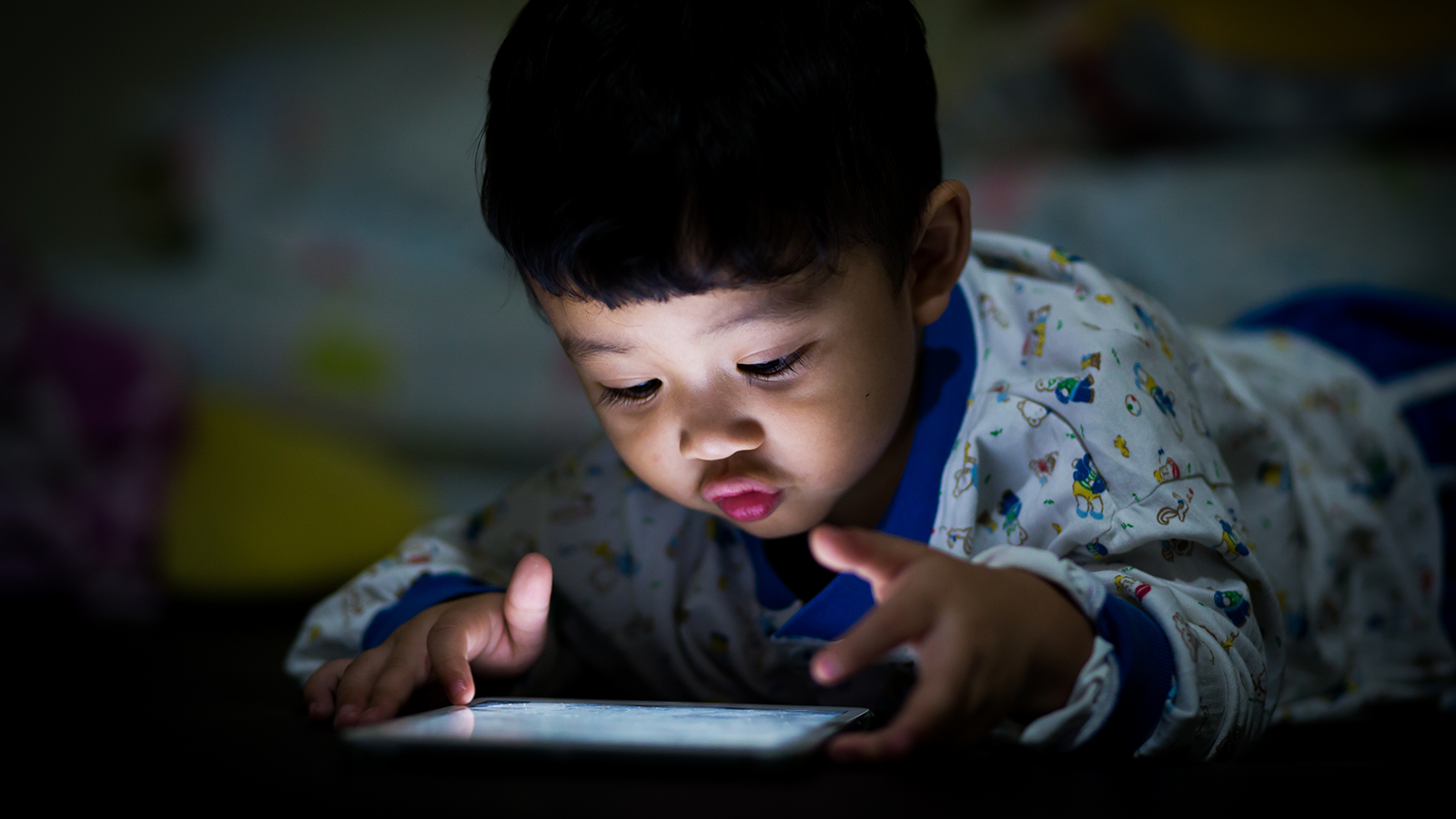
Mickey Langlais, PhD, Assistant Professor in the Department of Human Sciences and Design in Baylor University’s Robbins College of Health and Human Sciences, has received a three-year $519,501 R15 award from the Unice Kennedy Shriver National Institutes of Child Health and Human Development within the National Institute of Health for his project, “Mobile Media Use and Preschoolers’ Peer Interaction Skills.”
This highly relevant work comes at a time when parents are engaging in continual debate about the use of mobile devices by young children in an increasingly technology-savvy world. A 2025 survey by Common Sense Media revealed that, for children under eight-years-old, overall screen time use has remained relatively stable since 2020; however, how children are using their screen time has changed. The survey reported a 65% increase in time spent gaming, and nearly half of children were reported to have watched short videos on platforms like TikTok, YouTube Shorts, or Instagram Reels—all screentime activities that are particularly mobile-friendly.
In the midst of these changing behaviors, Langlais and his co-investigators, Brandon R. McDaniel, PhD (Parkview Health), and Qiong Wu, PhD (Florida State University), will examine the short- and long-term consequences of preschooler and parent mobile media (i.e., smart phones and tablets) use on preschoolers’ peer interaction skills. These particular skills are crucial for cognitive, social, and emotional development at this stage of childhood. Langlais and the research team will examine both the duration of use of specific mobile applications as well to what degree the applications are socially interactive, prosocial, violent, and educational.
“I am honored and excited to receive this support from the Eunice Kennedy Shriver National Institute of Child Health and Human Development to investigate how preschoolers’ mobile media use may shape the development of their social skills,” Langlais said. “Mobile media has become a routine part of early childhood, yet families and educators still have limited evidence to guide decisions about children’s use. This award will allow our team to generate practical, developmentally informed knowledge that can help promote healthier media experiences for young children.”
ABOUT ROBBINS COLLEGE OF HEALTH AND HUMAN SCIENCES AT BAYLOR UNIVERSITY
Established in 2014, Robbins College of Health and Human Sciences seeks to enhance health, quality of life, and human flourishing for all individuals and communities through education, research, and innovation. It includes seven academic departments—Communication Sciences and Disorders; Health, Human Performance, and Recreation; Human Sciences and Design; Occupational Therapy; Physical Therapy; Physician Assistant Studies; and Public Health. Robbins College offers 13 bachelor’s degrees, 10 master’s degrees, and six doctoral degrees, as well as nine graduate programs in partnership with the U.S. Army. Graduate programs in Robbins College are offered in a variety of modalities, including on campus, online, and hybrid.