

Baylor CSD Students Support Statewide Literacy Research in New Mexico
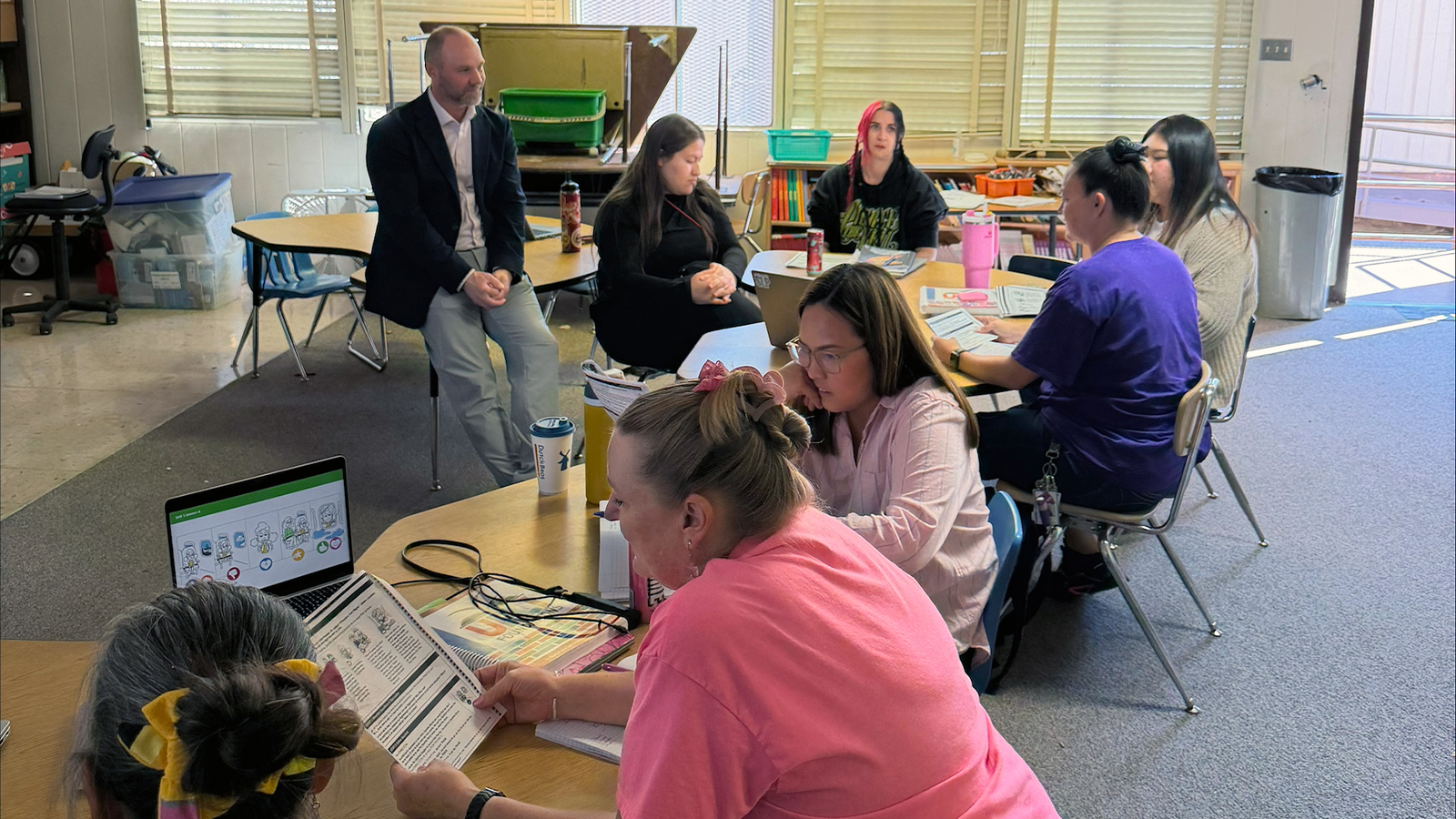
Research Chair of Child Language Disorders Douglas Petersen (top left)
Undergraduate and graduate students alike in Baylor University’s Department of Communication Sciences and Disorders (CSD) are gaining hands-on research experience while contributing to a large-scale initiative to improve early literacy outcomes. As part of a statewide project, a Baylor-led research team traveled to New Mexico during Fall 2025, where they spent three days assessing more than 400 kindergarten and first grade students in language comprehension and reading.
The project, led by Douglas Petersen, PhD, BCS-CL, The Vance Masteller Endowed Research Chair of Child Language Disorders and Professor in the Department of Communication Sciences and Disorders, focused on evaluating students’ language and reading abilities while also supporting their teachers in delivering structured language instruction.
“This is one of the largest randomized controlled trials in language instruction and assessment,” he said. “We’re addressing a problem that affects the majority of children in this country.”
Nationally, an estimated 70% of students struggle to read at a proficient level, and New Mexico currently ranks last in literacy performance. According to Petersen, the issue is often underrecognized.
“Many children can decode (sound out) words, but they struggle to understand the language behind them,” he said. “At its core, this is a language comprehension problem.”
Petersen says his Baylor team is among the first in the world to help teachers identify language difficulties early and then provide explicit, systematic instruction in language alongside decoding. Through this initiative, students begin to build the abilities needed for long-term reading success. The Baylor team returned in April 2026 to conduct post-assessments to measure the impact of the instruction on students' outcomes.
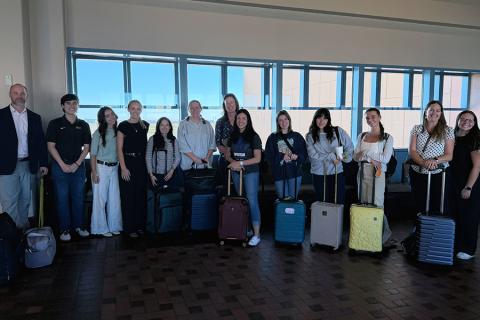
CSD doctoral student Camryn Lettich, who serves as Petersen’s lab manager, worked closely with six undergraduates and four doctoral peers. The experience provided hands-on training in real-world settings, and they learned how to assess language, which is an essential skill for every speech-language pathologist.
“My experience as a PhD student has been incredibly meaningful, especially through opportunities to engage directly with communities across New Mexico,” she said. “Working in these real-world school settings has allowed me to collaborate with educators, clinicians, and students in ways that directly inform our research and strengthen my own clinical skills and perspective. This work aligned with community-engaged approaches to language assessment and intervention, and it continues to shape my long-term goal of bridging the gap between research and practice in a way that is both evidence-based and accessible to the populations we serve.”
Coordinating this effort required a significant amount of teamwork, with the group testing nearly 100 children per day across multiple elementary schools. Baylor students were involved in all stages of the research process—from data collection to analysis—which has helped to prepare them for future clinical and research roles as speech-language pathologists. The project highlights Baylor’s focus on learning and service by combining academic training with a positive community impact.
Ultimately, this statewide project in New Mexico represents a major step toward addressing the nation’s reading comprehension crisis. Petersen and his CSD students are hopeful that this ongoing research and evidence-based language instruction will dramatically reduce the percentage of struggling readers to as low as 10%. This reflects not only important improvements in literacy outcomes but also the potential for long-term, widespread change in how children across the country develop language skills.
“Research like this is about solving real-world problems. This initiative will truly change the lives of these children. Also, it will generate crucial data that we can use to seek future external funding for even larger-scale projects, including ones based in Texas,” Petersen said. “And our Baylor students are an essential part of that work.”
ABOUT ROBBINS COLLEGE OF HEALTH AND HUMAN SCIENCES AT BAYLOR UNIVERSITY
Established in 2014, Robbins College of Health and Human Sciences seeks to enhance health, quality of life, and human flourishing for all individuals and communities through education, research, and innovation. It includes seven academic departments—Communication Sciences and Disorders; Health, Human Performance, and Recreation; Human Sciences and Design; Occupational Therapy; Physical Therapy; Physician Assistant Studies; and Public Health. Robbins College offers 13 bachelor’s degrees, 10 master’s degrees, and six doctoral degrees, as well as nine graduate programs in partnership with the U.S. Army. Graduate programs in Robbins College are offered in a variety of modalities, including on campus, online, and hybrid.