

Aphasia Awareness, Research, and Outreach Grows at Baylor University
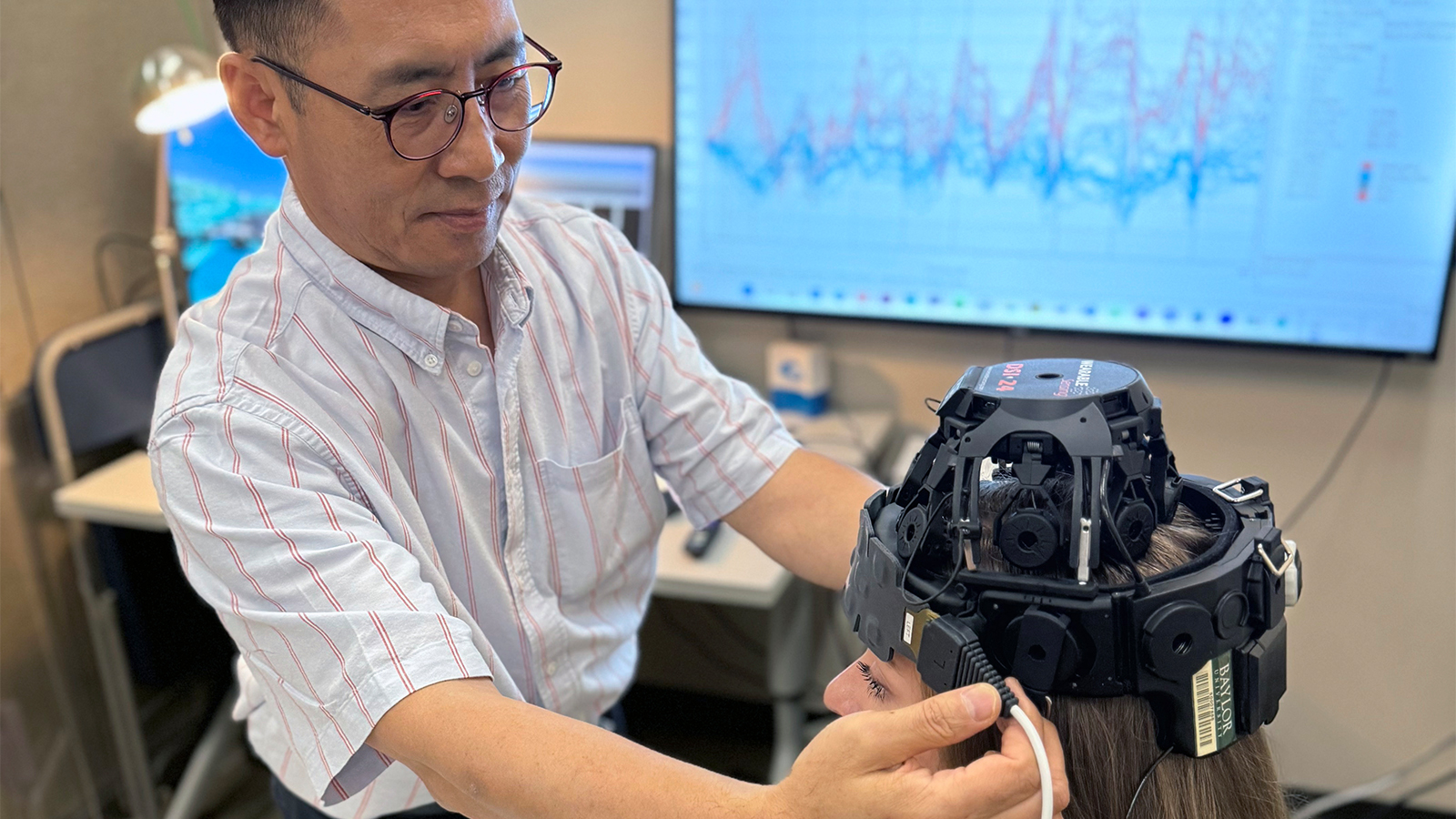
Aphasia researcher Jungjun Park (left) in his lab, the Baylor Adult Neurogenic Disorders and Aging Lab (BANDA)
Photo courtesy of BANDA
Often, surviving a stroke, traumatic brain injury, or neurological disease is just the first achievement in a long recovery. Many survivors experience impairment in their ability to communicate because of damage to parts of the brain that are responsible for language.
This language disorder—known as aphasia—affects each person differently, and it causes challenges in areas such as speech, reading, understanding, writing, numbers, and gestures. Depending on the root cause of brain trauma, aphasia can appear suddenly or develop gradually over time.
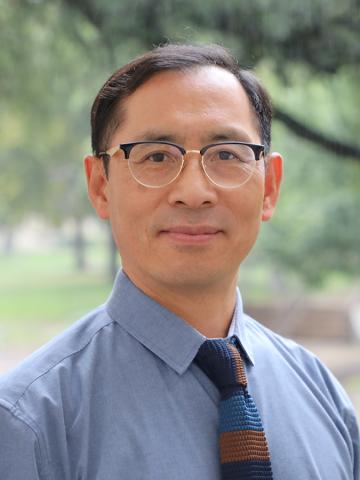
According to the National Aphasia Association, more than 2 million Americans are currently living with aphasia. Researcher Jungjun Park, PhD, CCC-SLP, Associate Professor in Baylor University’s Department of Communication Sciences and Disorders (CSD), says early and on-going intervention with a speech-language pathologist can help individuals relearn language skills or develop alternative ways to communicate through electronic devices, gestures, notebooks, and pictures.
Increasingly, many speech-language pathologists are embracing the integration of technologies like virtual reality (VR), augmented reality (AR), and mobile applications into practice. These digital tools tend to provide accessibility and personalization, allowing people living with aphasia to have help beyond traditional face-to-face therapy.
“Studies of AR-based language therapy report gains in chronic sentence comprehension and repetition for people with aphasia, suggesting that immersive or semi-immersive visual environments can support both processing and engagement,” Park said. “More broadly, digital therapeutics are rapidly developing in aphasia rehabilitation, with AR and VR emerging as key platforms and signaling a move away from decontextualized drill toward ecologically valid communicative experiences.”
The National Institute on Deafness and Other Communication Disorders reports that family involvement is a crucial component of treatment to learn the best way to communicate with their loved one. Patience is key, as recovery is never a problem with memory or intelligence, but instead, directly related to how an individual now uses language. Further, Park says protecting one’s mental health is an important aspect for all those affected by the language challenges—for the individual and their caregivers alike.
“Aphasia affects far more than language—it alters a range of aspects of life, including emotions, identity, social dynamics, mental health, and relationships for people with aphasia and their families,” he said.
Park is currently preparing two key studies in his lab, the Baylor Adult Neurogenic Disorders and Aging Lab (BANDA). One study will examine how VR-based immersive environments can be integrated with established intervention approaches for people with aphasia, with an emphasis on enhancing mood, motivation, and sustained engagement throughout rehabilitation. Using electroencephalography (EEG) and functional near-infrared spectroscopy (fNIRS), Park’s team will investigate prefrontal activation as a neural correlate of motivation and intentional effort in response to an app-based VR mindfulness intervention. In a second aphasia study, Park will focus on digital and group-based mental health interventions for caregivers with anxiety, burnout, depression, guilt, and/or social isolation. His team will utilize transcranial magnetic stimulation (TMS), which can alleviate depressive symptoms, to examine how such neuromodulation can be meaningfully integrated with psychosocial and digital supports.
“Caregiver burnout and social isolation are profound concerns, yet there is still a striking lack of systematic, empirically tested support interventions specifically designed for this group,” he said. “Research highlights strong demand for small-group education, practical home-support guidance, and consistent emotional support. Across caregiver programs, respite, safe spaces for sharing emotions, and community-based support groups are emphasized as essential to preventing burnout and isolation. Within aphasia care, there is growing recognition that we must address depression, anxiety, loss of identity, social withdrawal, and caregiver burnout in a more integrated way.”
Looking forward, Park and a team of CSD undergraduate and graduate students anticipate launching an aphasia support group in Fall 2026, which will provide a regular meeting space for those impacted to foster shared understanding, emotional support, and practical problem-solving around communication and daily life. Park is excited to see how the University’s community outreach closely ties in with his own research studies, while also creating learning opportunities for his speech-language pathology students.
“It is envisioned as a key element of our program’s community outreach, building sustained relationships with community members living with aphasia and their support networks,” he said. “Over time, we hope that this Baylor-based support group will stand as a clear example of rehabilitation education in action, where evidence-informed care, community engagement, and student learning are tightly integrated. In doing so, our students’ clinical experiences will extend beyond the classroom into real community contexts, representing a meaningful strengthening of our educational pedagogy and our commitment to service.”
Individuals with aphasia, family members, and caregivers who are interested in research participation or in joining our community outreach activities beginning in Fall 2026 are invited to contact Dr. Jungjun Park, for further information and support.
ABOUT ROBBINS COLLEGE OF HEALTH AND HUMAN SCIENCES AT BAYLOR UNIVERSITY
Established in 2014, Robbins College of Health and Human Sciences seeks to enhance health, quality of life, and human flourishing for all individuals and communities through education, research, and innovation. It includes seven academic departments—Communication Sciences and Disorders; Health, Human Performance, and Recreation; Human Sciences and Design; Occupational Therapy; Physical Therapy; Physician Assistant Studies; and Public Health. Robbins College offers 13 bachelor’s degrees, 10 master’s degrees, and six doctoral degrees, as well as nine graduate programs in partnership with the U.S. Army. Graduate programs in Robbins College are offered in a variety of modalities, including on campus, online, and hybrid.