

Understanding Cultures Through Public Health Research
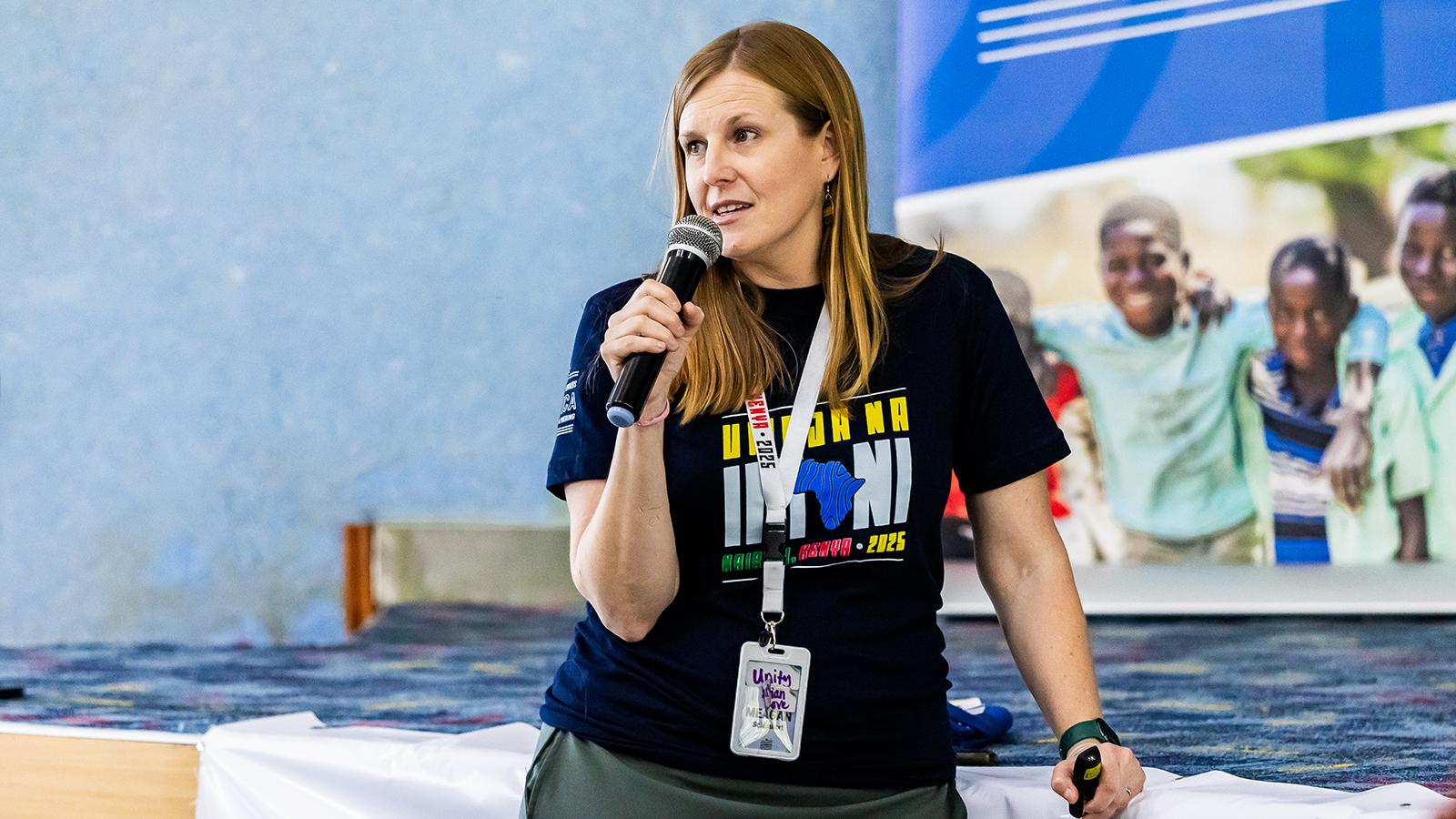
On a mission trip after her undergraduate experience, Meagan Schlinkert, PhD, MPH, traveled to Vanuatu, a remote country designed of more than 80 islands, located about 1,100 miles east of Australia. There, she met a lady who would inspire her continued education in public health.
“Her baby had just died from diarrhea. Diarrhea. She lived in a very remote village, and so the only way to get to a doctor was walking several hours,” she recalled. “It was crazy to me—I couldn’t believe that this happened. And sadly, it still happens. But just knowing that little educational steps might have saved her baby’s life—oral rehydration solution or health education programming could have been made available to her—I decided right then that I would go back to school to get my master’s degree.”
Schlinkert decided to return to Baylor University, where she had previously received her Bachelor of Science in Education, specializing in community health education. She enrolled and earned her Master of Public Health (MPH). Afterward, she began working for the International Rescue Committee, assisting refugees, survivors of torture, and asylum seekers who were fleeing their countries out of persecution.
Eventually, Schlinkert enrolled in a Doctor of Philosophy (PhD) in Global Health program at a university in Arizona. She said a PhD had never been on her radar, but the program itself intrigued her, and in May 2025 she graduated.
“I went in thinking that I wanted to work with water sanitation and hygiene—it was directly related to the lady I had met in Vanuatu,” she recalled. “But then, right after starting the PhD program, my daughter was born. And then a few months later, the pandemic happened.”
Knowing her dreams of traveling for research were not going to happen, Schlinkert changed course. To start, she was given an opportunity to work alongside a professor on an Arizona statewide coronavirus pandemic survey, choosing to focus on the health equity and depressive symptoms aspects. Although this initial survey was statewide, she knew she wanted to narrow her focus to immigrant populations—this led to additional research with another professor using a more specific COVID-19 survey focused on women who gave birth during the pandemic in Arizona. Ultimately, Schlinkert ended up writing three papers for her PhD dissertation that focused on: 1) exploring factors of vulnerability and depressive symptoms of the Arizona population during the pandemic, 2) maternal health experiences for low income, immigrant, and refugee women who gave birth during the pandemic, and 3) factors influencing breastfeeding continuation during the pandemic with the same low income, immigrant, and refugee population.
Maternal Health Experiences
“It’s the start of everything, and we have a lot of room to grow in this area,” she said.
Maternal health experiences differ drastically across the country, with ethnicity, race, and social structures often being large factors in the outcome. According to the World Health Organization, the United States has the highest maternal mortality rate among high-income countries, and worldwide, a maternal death occurred every two minutes in 2023. The sad truth is that most of these deaths can be prevented with access to equitable and quality healthcare during pregnancy, childbirth, and postpartum.
As a PhD student, Schlinkert worked with her adviser to analyze a COVID-19 survey given to a diverse set of women—immigrants and refugees—who gave birth at a public safety-net hospital. This helped her to narrow down research from Arizona’s population as a whole to a population that experiences many factors of vulnerability, especially during the challenging time of childbirth. Most safety-net hospitals tend to serve a low-income population, regardless of health insurance, immigration status, or ability to pay—meaning the hospitals don’t turn away patients. To aid in a wide array of cultural and language differences, the particular hospital involved in Schlinkert’s research implemented a cultural health navigator program to bridge the gap between potential barriers with a complex healthcare system.
Schlinkert enjoyed analyzing the first-hand experiences of women in the form of quantitative and qualitative data. The women who participated in the study shared their personal stories of maternal experiences during COVID-19—what it was like to attend prenatal appointments alone and be separated from loved ones while giving birth, learning to breastfeed and care for a newborn, how they navigated different culture norms, and unique postpartum experiences they encountered.
“I was also a new mom who gave birth right before the pandemic, and then again after the height of the pandemic,” she shared. “So, I felt a real connection to the research, to the specific population, and to the women.”
While the new mothers each experienced challenging moments, Schlinkert was curious what the women relied on for strength during their motherhood-pandemic combination. To investigate, she focused on a strengths-based framework, looking at it through the maternal adaptive capacity theory. Overall, Schlinkert found that families were more involved throughout pregnancy and birth, and mothers indicated they were very appreciative of that closeness and found it to be a strong support system.
“Many responses indicated that they really cherished the extra family time. For example, maybe their partner was not involved at all during previous births but was very involved in this one. Or the time at home during lockdown allowed parents to get to know their other children better because they weren’t going to a physical school or workplace,” she said. “A lot of people also talked about how religious or spiritual experiences, like their faith, helped them get through the time.”
Leaning on Her Baylor Experience
Schlinkert says Baylor’s Department of Public Health prepared her well for her PhD journey. Courses and professors taught her how to research, write papers, and give engaging presentations, along with how to engage successfully in the workforce and to surround yourself with others who want to create good in the world.
In her dissertation, Schlinkert chose to acknowledge Professor Eva Doyle, PhD, MSEd, MCHES—an inspiration from long ago.
“Dr. Doyle definitely made such an impact on me. She guided me on a community health path during my undergrad education, mentored me during my master’s degree, and then helped me get connected to meaningful organizations. Honestly, I don’t think I would have been down this whole path if it weren’t for Dr. Doyle,” she shared. “I feel very indebted to her, and I wanted to make sure I officially thanked her—and really, I am so grateful for my time at Baylor and to all of my professors for the wonderful experiences and mentorship.”
Presenting her PhD dissertation was a full circle moment for Schlinkert, remembering back to a master’s program poster presented about research concerning a population from Romania.
“It’s just so important to not take for granted getting to know the people that are around us. We need to understand the importance of getting to know our neighbors, hearing diverse voices, and also loving and serving our neighbors—no matter where they’re from or what they look like,” she said. “Research is a way to help people better understand cultures. I think that’s an important aspect of research that sometimes is overlooked.”
ABOUT ROBBINS COLLEGE OF HEALTH AND HUMAN SCIENCES AT BAYLOR UNIVERSITY
Established in 2014, Robbins College of Health and Human Sciences seeks to enhance health, quality of life, and human flourishing for all individuals and communities through education, research, and innovation. It includes six academic departments—Communication Sciences and Disorders; Health, Human Performance, and Recreation; Human Sciences and Design; Occupational Therapy; Physical Therapy; and Public Health—along with the Division of Health Professions, which houses the Master of Physician Assistant Studies program. Robbins College offers 13 bachelor’s degrees, eight master’s degrees, and six doctoral degrees, as well as nine graduate programs in partnership with the U.S. Army. Graduate programs in Robbins College are offered in a variety of modalities, including on campus, online, and hybrid.