

A Space for All Bears at Homecoming
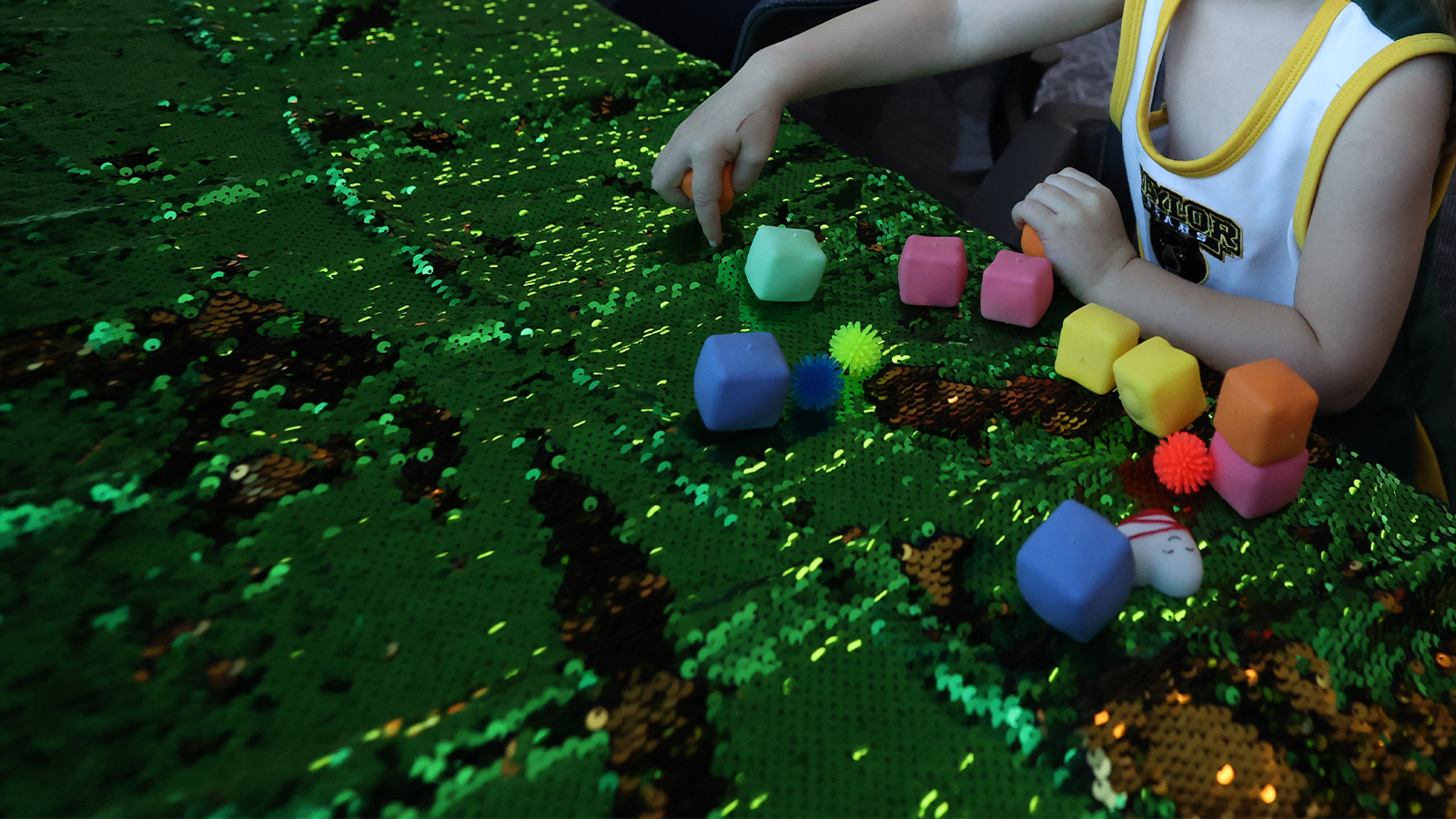
On Halloween night, the Homecoming at the Hurd Fall Festival drew the Baylor University community together for an evening of celebration. The mix of candy, music, games, and steady crowds filled the space with energy. For many, it was part of the excitement. For others, the sensory intensity felt overwhelming.
To create an inclusive experience for these visitors, the Mark and Paula Hurd Welcome Center partnered with the Department of Occupational Therapy and the Baylor Center for Disability and Flourishing (BCDF) to offer a sensory room. Created as “a space for all Bears to take a break and regulate,” the room gave visitors a comfortable place to rest and recharge before returning to the festival.
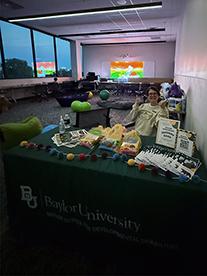
While Baylor has offered sensory rooms at past events, this was the first time Baylor Occupational Therapy, BCDF, and the Hurd Welcome Center collaborated to create one together. The idea for Occupational Therapy to join the effort came from Doctor of Occupational Therapy student Kristi Baker, OTA, who chose to focus her doctoral capstone with BCDF.
With support from Kristen Padilla, PhD, NCSP, LSSP, BCBA, LBA, Director of BCDF, and Kaitlyn Cremer, OTD, MOT, OTR, SCLV, CAPS, Clinical Associate Professor and Director of the Doctoral Capstone for the Department of Occupational Therapy, a cross-departmental committee formed to design and host the space.
“Occupational therapy fits right in with this initiative. Sensory rooms and their development are within our scope of practice and expertise,” Baker said.
Why Sensory Rooms Matter
Every moment, our bodies process sensory input—not just the five senses of sight, sound, touch, taste, and smell, but also vestibular sense (balance and spatial orientation), proprioception (awareness of body position and movement), and interoception (internal cues like hunger or thirst).
For some individuals, sensory inputs like crowded spaces and loud noises quickly become overwhelming. Others need more stimulation and naturally seek out movement or tactile input. When those needs aren’t met, the body becomes dysregulated, making it harder to stay calm, focused, or fully engaged.
Sensory rooms help meet these needs. These environments are designed to help calm heightened emotions and offer diverse stimulating tools so visitors can pause, regulate, and return to the event rather than leave because they are uncomfortable.
“I think sometimes people assume sensory rooms are just for children or people with disabilities, but we all need to be able to regulate,” Baker said.
Creating the Space
Once the partnership was approved, the committee raised nearly $500 through donations from Baylor Occupational Therapy students and faculty. The funds covered printing and supplies, and even allowed the team to purchase a bubble lamp that can be used in future sensory rooms.
After securing funding and supplies, the committee worked to shape the room into an environment that supported different types of sensory regulation. This included dim lighting, soft music, and stations tailored for different needs—therapy balls for proprioceptive input, sand and bubbles for tactile engagement, and more.
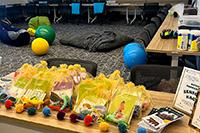
Baylor Occupational Therapy students and BCDF faculty staffed the space, assisting visitors and sharing information about sensory inclusivity through brochures and take-home sensory kits. Throughout the weekend, the committee continued raising awareness by tabling at other Homecoming events.
The sensory room welcomed more than 200 visitors on Halloween night and received overwhelmingly positive feedback. Some of Baker’s favorite moments from this experience were seeing all the people who benefitted from the room, from former college roommates catching up while their kids played to curious students who simply wanted to learn more about sensory regulation. Several visitors told Baker they hope the sensory room is available again next year.
“Sometimes events can feel overwhelming, especially for families with children,” Baker said. “They want to be part of the fun, but sensory challenges make it difficult. Spaces like this create belonging for everyone, people with and without disabilities. That’s how we move forward: inclusion for all, not just a designated area for some.”
A More Accessible Future
Looking ahead, Baker hopes to see continued partnership between BCDF and Baylor Occupational Therapy, as well as perhaps potential sensory spaces at athletic events.
“Advocating for occupational therapy in the sensory room led me to ask, why don’t we have sensory spaces at football games, basketball games, or other big events? Those environments can be intense, and having a calming space would make a huge difference,” said Baker.
With growing interest from Baylor’s student government and other campus partners, Baylor’s sensory room initiative is just getting started—creating inclusive and accessible spaces where every Bear feels welcome.
ABOUT ROBBINS COLLEGE OF HEALTH AND HUMAN SCIENCES AT BAYLOR UNIVERSITY
Established in 2014, Robbins College of Health and Human Sciences seeks to enhance health, quality of life, and human flourishing for all individuals and communities through education, research, and innovation. It includes six academic departments—Communication Sciences and Disorders; Health, Human Performance, and Recreation; Human Sciences and Design; Occupational Therapy; Physical Therapy; and Public Health—along with the Division of Health Professions, which houses the Master of Physician Assistant Studies program. Robbins College offers 13 bachelor’s degrees, eight master’s degrees, and six doctoral degrees, as well as nine graduate programs in partnership with the U.S. Army. Graduate programs in Robbins College are offered in a variety of modalities, including on campus, online, and hybrid.