

Run Your Best Turkey Trot with These Tips from Baylor Experts
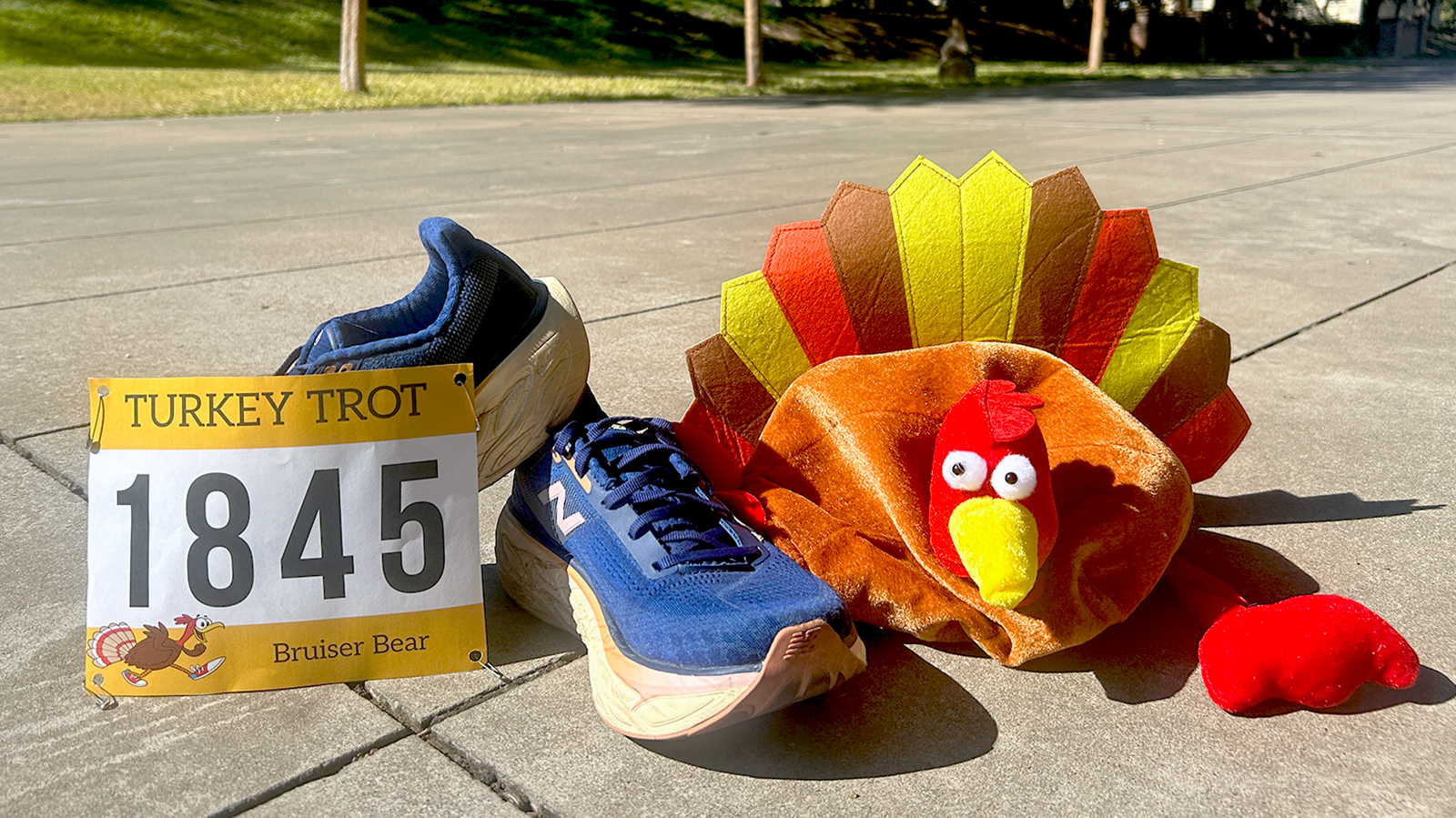
Thanksgiving is right around the corner, which means it’s time to register for your local Turkey Trot race or fun run! Experts in Baylor University’s Robbins College of Health and Human Sciences offer a few suggestions to enhance your Trot experience:
Hydrate, Hydrate, Hydrate
Since most Turkey Trots are 5Ks (although longer options exist), Associate Professor of Nutrition Sciences LesLee K. Funderburk, PhD, RD, CSCS, shares that runners’ “biggest concern nutritionally is hydration.” According to Funderburk, hydration starts the day before the race, with about 0.5 to 1 ounce of water per pound of body weight is recommended For example, a 130-pound individual would consume a minimum of 65 ounces of water.
About one to two hours before the run begins, Funderburk suggests consuming 1-2 cups of water. “And though not absolutely necessary for a short race, a small, easily digestible snack, like a banana or small bagel, can provide additional fuel for your Trot,” she adds.
Dress for Success
Senior Lecturer of Apparel Design and Merchandising Jaynie Lewis Fader points to weather as the first consideration when deciding how to dress for your Turkey Trot. “It’s best to dress in layers and plan as if it will be 10 to 20 degrees warmer than actual temperatures, as you can easily shed layers if needed.” Fader points out that many races will donate sweatshirts that have been discarded during a race after temperatures rise, so check your particular race information to see if your local Trot participates in this type of charity initiative.
Avoid cotton socks that retain moisture, and instead choose socks that feature zone cushioning, airflow ventilation, and arch support. Fader also recommends always wearing shoes that you have tested and avoiding donning brand new kicks on your actual race day.
When considering base layers, opt for thin, breathable, moisture-wicking (to help avoid chafing!) fabric that fits snugly and is lightweight. According to Fader, tops should be fitted around the chest and looser at the waist to facilitate airflow. And don’t forget about the details. “Having pockets for essentials is important,” Fader shares. “Also, make sure you can puncture the fabric of your shirt with a safety pin to secure your running number.”
Warm Up and Cool Down
Jessica Feda, PT, DPT, DSc, OCS, Clinical Assistant Professor of Physical Therapy, recommends the RAMP warm-up—Raise, Activate, Mobilize, Potentiate—“to prepare your body and mind for what’s ahead.” She shares, “A RAMP program not only warms up your muscles, preparing them for dynamic stretching, but it also readies the neuromuscular system.” The four steps of the RAMP warm-up include:
- Raise your core temperature by jogging or briskly walking for 10 to 15 minutes.
- Activate key running muscles, especially your posterior chain—glutes, hamstrings, and calves—through exercises like bridges, single-leg bridges, calf raises, clamshells, or squats.
- Mobilize your joints through dynamic stretches such as hamstring sweeps, leg swings, or “open and close the gate” for hip mobility.
- Potentiate your stride with short bursts of high knees or quick pickups to wake up your nervous system.
Just like you warmed up, it’s important to cool down after your Turkey Trot as well. “Your recovery starts as soon as you cross the finish line,” according to Feda. She recommends that you keep moving after the race to alleviate post-run muscle soreness by removing metabolites, like lactic acid—a light, 10- to 15-minute jog within 10 to 15 minutes of finishing the race should do. She also recommends eating carbohydrates and protein in a 4:1 ratio (4 grams of carbs for every 1 gram of protein) within 30 to 60 minutes of the race and drinking roughly 3 cups of water for every pound lost during exercise to rehydrate and support muscle recovery.
Happy Trotting!
ABOUT ROBBINS COLLEGE OF HEALTH AND HUMAN SCIENCES AT BAYLOR UNIVERSITY
Established in 2014, Robbins College of Health and Human Sciences seeks to enhance health, quality of life, and human flourishing for all individuals and communities through education, research, and innovation. It includes six academic departments—Communication Sciences and Disorders; Health, Human Performance, and Recreation; Human Sciences and Design; Occupational Therapy; Physical Therapy; and Public Health—along with the Division of Health Professions, which houses the Master of Physician Assistant Studies program. Robbins College offers 13 bachelor’s degrees, eight master’s degrees, and six doctoral degrees, as well as nine graduate programs in partnership with the U.S. Army. Graduate programs in Robbins College are offered in a variety of modalities, including on campus, online, and hybrid.