

Robbins College Expert Shares Tips to Navigate Family Stress During Holidays
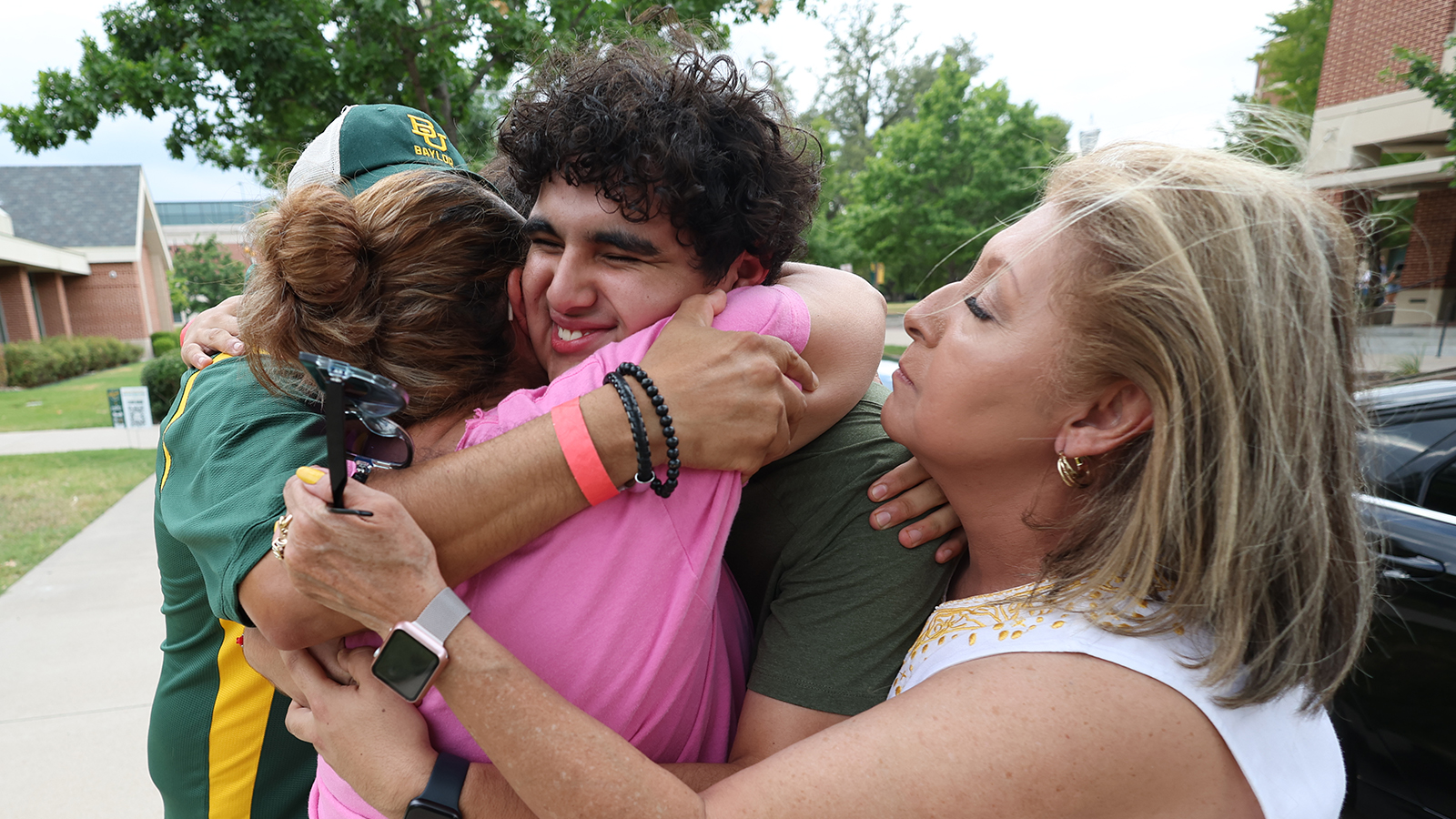
’Tis the holiday season at Baylor University. But, as the Christmas spirit grows around campus, so does stress surrounding finals and the end of the semester. Thankfully, Assistant Professor of Child and Family Studies Nick Frye, PhD, has highlighted three common problems during the holidays—and how to address them.
People Do Not Recharge During the Holidays
With stress piling up toward the end of the semester, the Thanksgiving holiday can provide much-needed time to rest. However, most students tend to try to do too much in a short amount of time, leaving little room for relaxation and leading to burnout before classes resume.
The Fix? Appreciate Every Moment
Going from one social event to another can easily lead to a pileup of stress, making it more difficult to relax. If you can minimize your stress, you’ll be able to savor moments while also recharging.
“It’s being in that moment and appreciating what you have in front of you. If you’re around someone you love, say it,” Frye advised.
It can be hard not to think about upcoming class projects and exams, but enjoying time with family can relieve the impact of stressors. For example, participating in festive activities and talking to family members can prevent burnout because it helps us use the week off as intended—as a break.
Frye emphasizes that showing gratitude and giving to others boosts our happiness and mental health, saying gratitude can also provide positive health benefits such as minimizing the risk of getting a cold—no one wants to try to take a final while sick. Even if it’s a “fake it ’till you make it” situation, being grateful during the holidays alleviates stress and gets us into the spirit of giving.
Losing Independence When Returning Home
For many students, college is the first time to go out into the world and explore, demonstrating newfound independence—until coming home—when an 11:00pm curfew kicks in. Suddenly, the holidays become more stressful when there is no opportunity for a late-night Moody study session.
The Fix? Compromise
Parents are excited for their kids to come home for the holidays, and likewise, you are happy to return for a long-awaited break. And, while this time for reunion is exciting, it’s also important for both students and parents to reestablish boundaries.
“During the break, many parents want to spend as much time as possible with their kids, but compromise is absolutely essential,” Frye said. “You may realize that there’s a specific reason why the curfew is at a certain time. Still, even when you’re on the same page, there will be times when you butt heads with your parents—and that’s okay, because you are your own person now.”
Dealing With the Unavoidable
It’s dinner and the whole family is at your house, including that one member who tends to cause problems. On top of that, you have exams next week. How do you deal with situations that are bound to happen?
The Fix? Reframe the Situation
During those less-than-ideal moments, stay positive and reframe your situation to focus on the good things happening. Instead of worrying about exam results, switch your attention to the family Christmas tree being decorated later. Rather than getting into a disagreement with a sibling, reframe the situation as an opportunity to understand a different perspective or don’t put yourself into that situation and talk to someone else about how much you’ve enjoyed coming home.
“This doesn’t mean that you should suppress your emotions,” Frye said. “It’s about minimizing stress so that you can make the most of every moment. No matter the holiday, make sure that you savor the time with people.”
ABOUT ROBBINS COLLEGE OF HEALTH AND HUMAN SCIENCES AT BAYLOR UNIVERSITY
Established in 2014, Robbins College of Health and Human Sciences seeks to enhance health, quality of life, and human flourishing for all individuals and communities through education, research, and innovation. It includes six academic departments—Communication Sciences and Disorders; Health, Human Performance, and Recreation; Human Sciences and Design; Occupational Therapy; Physical Therapy; and Public Health—along with the Division of Health Professions, which houses the Master of Physician Assistant Studies program. Robbins College offers 13 bachelor’s degrees, eight master’s degrees, and six doctoral degrees, as well as nine graduate programs in partnership with the U.S. Army. Graduate programs in Robbins College are offered in a variety of modalities, including on campus, online, and hybrid.