

Prepared to Practice: Baylor Physical Therapy’s Approach to Clinical Education
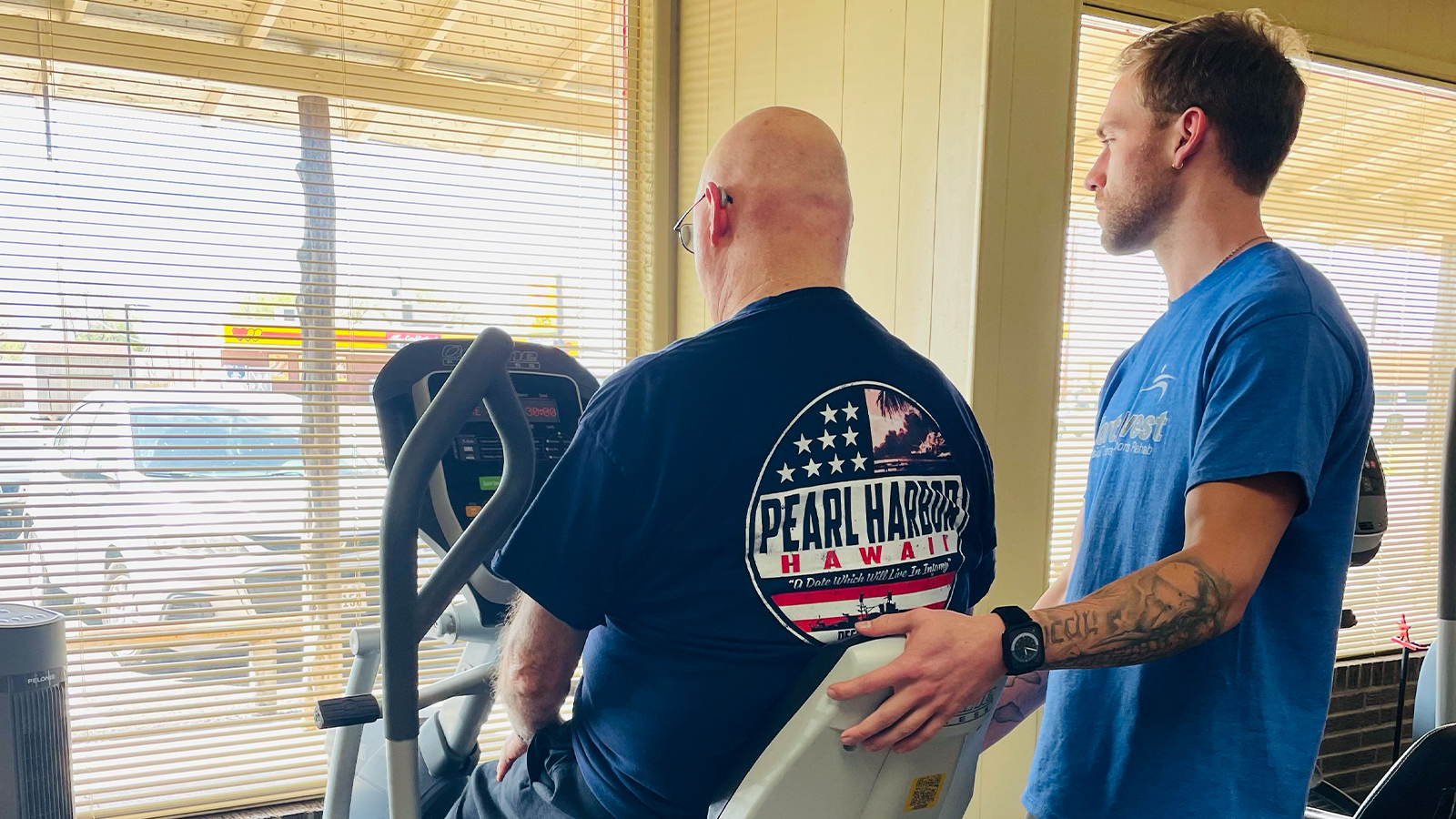
Baylor University’s Doctor of Physical Therapy (DPT) program, ranked #42 in the nation and #3 in Texas by U.S. News & World Report, 2025, is distinguished by its innovative hybrid curriculum. For the first three trimesters, students complete didactic coursework online and participate in lab immersions in Waco, Texas. The curriculum covers foundational topics like anatomy and physiology, while also teaching hands-on professional skills such as muscle testing and using assistive devices in therapy. At the end of the fourth trimester, students begin their first of three clinical education experiences during which they practice skills under the guidance of Clinical Instructors in clinics across the country.
“Clinical education is the culmination of everything our students have been doing in their didactic and lab training,” Christy Gantt, DPT, Clinical Associate Professor and Director of Clinical Education for the Department of Physical Therapy, said. “We try to make sure that our students get something that both prepares them and excites them for what they can do in the future.”
Baylor Physical Therapy staff work individually with students to match clinical placements based on academic needs, career goals, and location preferences. As much as possible, students are placed into clinics in or near their hometown. Although stepping into a professional clinic can feel intimidating, students find the program’s structure builds their confidence.
“It was very nerve wracking the first few days, but as I continued, I realized how much I really do know and how well we were prepared,” Ethan Torrance, a second-year DPT student, said. He credited lab immersions for building trust in his skills. “When you’re getting the hands-on experience, even if it’s with other classmates, you get the tactile feedback of ‘Hey, I’ve done this before with my hands on a patient.’”
Fellow second-year DPT student Bethany Bradshaw also felt well-prepared and less nervous for her first clinical education experience due to classes she’d taken.
“We learned the entire human body before we even step foot in the clinic,” Bradshaw said. “We completed our Aging Adult class, which focuses on inpatient care, so that people who may be placed in a skilled nursing facility or hospital develop those skills before starting their rotation.”
Torrance and Bradshaw both recently completed their first clinical education experiences at outpatient clinics in different parts of the country. Torrance worked in a clinic in Woodward, Oklahoma, which often treated patients with sports injuries, post-operative needs, and neurological conditions. Applying learning from labs to patient care was rewarding for Torrance.
“It was so awesome to see a technique I learned in DPT lab be successful when I’m working on a patient and they feel like I’m helping them get better,” he said.
Bradshaw’s rotation took place in Tampa, Florida, where she enjoyed seeing a variety of physical therapy cases. While there, Bradshaw saw clear connections between her coursework and clinic duties.
“I remember we started the Baylor DPT program by learning how to take a subjective history on a patient, and then we learned how to treat a patient and interventions and all the tests you can go through,” she said. “I got to see every step of the process from scheduling a patient to discharging them after they’ve healed. And, most importantly, I also got to be part of every step of that process in the clinic.”
Sean Counihan, who graduated in 2022, returned to the program as a Clinical Instructor after seeing the impact of clinical education firsthand. Clinical Instructors are tasked with overseeing students during their rotation and preparing them for future success in the profession. He is passionate about teaching the next generation of physical therapists.
“I love passing on knowledge and experience that I’ve been able to gain in either physical therapy or the different careers that I’ve had through my life,” he said. “Clinical rotations are very realistic and comparative to what students are going to experience post-graduation.”
Counihan’s approach to mentoring students in their first rotation focuses on helping students with patient communication, learning different techniques, and applying academic concepts to real-world situations. When asked what qualities set Baylor DPT students apart, Counihan pointed to their professionalism, empathy, drive to learn, and desire to make a difference, saying, “Baylor DPT students are just a different breed.”
Robust clinical education experiences are an important piece of the Baylor DPT curricular puzzle. When students travel to Waco for a lab immersion, they are educated and prepared to take full advantage of the hands-on instruction due to their online courses. Likewise, when students begin their clinical rotations, they are equipped to begin making an impact on clients even as they continue to learn to practice—because of the skills and experience acquired during lab immersions. This intentional, holistic approach to hybrid education is what helps form Baylor DPT students into outstanding physical therapists of a “different breed.”
Become a Baylor Physical Therapy Clinical Instructor! In order to optimize these experiences for our students, we are always on the lookout for new opportunities for clinical education instructors and sites. Being a CI is either an 8 week or 15 week commitment of mentoring, teaching, and leading our current Baylor DPT students in their clinical rotation.
ABOUT ROBBINS COLLEGE OF HEALTH AND HUMAN SCIENCES AT BAYLOR UNIVERSITY
Established in 2014, Robbins College of Health and Human Sciences seeks to enhance health, quality of life, and human flourishing for all individuals and communities through education, research, and innovation. It includes six academic departments—Communication Sciences and Disorders; Health, Human Performance, and Recreation; Human Sciences and Design; Occupational Therapy; Physical Therapy; and Public Health—along with the Division of Health Professions, which houses the Master of Physician Assistant Studies program. Robbins College offers 13 bachelor’s degrees, eight master’s degrees, and six doctoral degrees, as well as nine graduate programs in partnership with the U.S. Army. Graduate programs in Robbins College are offered in a variety of modalities, including on campus, online, and hybrid.