

Nutrition Sciences and Interior Design Programs Embark on Five-Year Vocational Mission in Guatemala
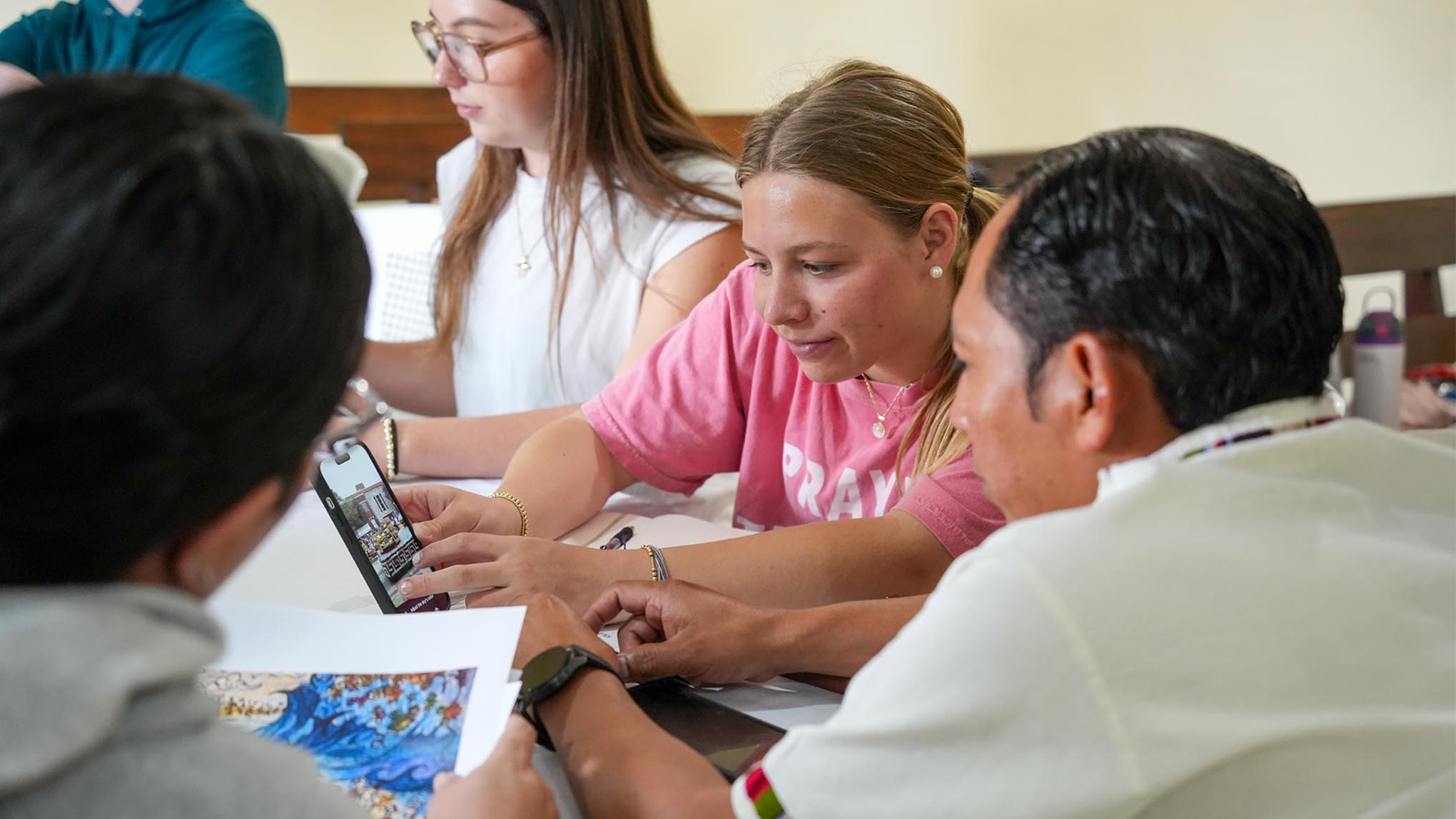
Photos Courtesy of Baylor Missions
In the rural town of Bárcena, Guatemala, Iglesia Bautista Luz de Vida (Luz de Vida Baptist Church) not only serves the community’s spiritual needs, but also their physical and emotional needs. To amplify and expand the community impact of Luz de Vida, Baylor University and One More Child, a mission organization that provides Christ-centered support to children, mothers, and families in need, have formed a five-year partnership with the church.
As the sponsoring church for One More Child, over the next five years, Luz de Vida will benefit from a wide array of expertise within Baylor’s Department of Human Sciences and Design (HSD), specifically through the Nutrition Sciences and Interior Design programs. For the Baylor faculty and students involved, this “vocational mission” is rooted in a commitment to Christian service that directly utilizes professional skills.
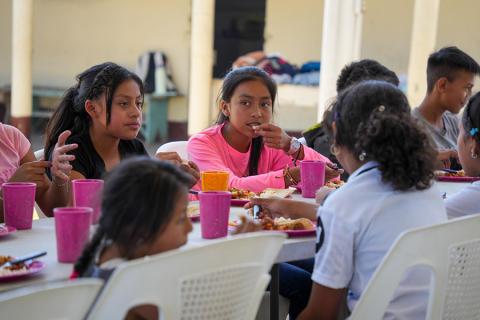
In Spring 2024, the collaboration kicked off with a focus on child nutrition. LesLee K. Funderburk, PhD, RD, Associate Professor of Nutrition Sciences and Program Director for the Dietetic Internship, developed menus for One More Child’s weekly events, ensuring the participating children receive healthy, filling meals. Menus and recipes were based on locally available, low-cost ingredients, and local eating habits and food preferences were also considered in the menu planning. While on location, Funderburk also aided in selecting cooking equipment to build out the church’s new kitchen.
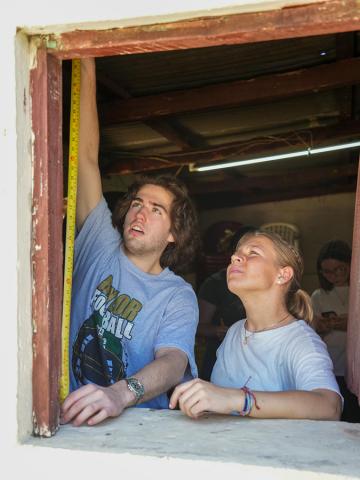
Next, in November 2024, three Interior Design faculty members traveled to Bárcena to survey the church property and understand the facility needs to best serve the ministry focus. Clinical Associate Professor Ann Theriot, MA, ASID, NCIDQ, Professor Debra Harris, PhD, and Lecturer Hillary Burgess, NCIDQ, then introduced the project to their junior cohort of Baylor Interior Design students for a Spring studio course. These students were divided into groups to tackle a variety of space planning challenges, as well as furnishing and finish needs. For example, one team was responsible for the architectural drawing set, another wrote architectural specifications, and another sourced local furniture and equipment.
After combining creativity, problem solving, and research, the students led a virtual meeting to present their evidence-based design work to One More Child and its construction management team in Guatemala, Florida, and Alabama. When the team requested a handful of changes to the drawings, students gained a realistic glimpse of working with real-world clients.
“It was student-led, and enthusiastically received by our ministry partners, and we were really proud of our students for applying their skills to provide tangible help to this ministry,” Theriot said. “This project has and will continue to provide great opportunity for us to use our vocational skills, both as faculty and students, by offering architectural and design support so that the church can best enable the work that the community is already doing. Luz de Vida has big plans for ministry expansion, and we are glad to help them think strategically about their vision and property.”
After the presentation, three interior design students were gifted the opportunity to travel with faculty to personally meet the Bárcena ministry partners and continue the work they had started in the classroom.
“It was eye-opening and deeply meaningful. Seeing the way this community lived and how grateful they were for even small improvements made me realize the power of design to improve lives,” senior Julia Smith said. “It reminded me of the importance of gratitude and of keeping God at the forefront of our lives, recognizing that everything we have is a gift meant to serve others and reflect His love. Also, it solidified my professional desire to design spaces that truly serve people.”
As of July 2025, the initial bidding phase is wrapping up and construction will soon begin. This includes construction of new restrooms and classroom spaces, rebuilding the property’s exterior wall, and finishing out the kitchen—all designed by Baylor students. Once construction is complete, students will have the opportunity to contribute their artistic talents on-site by painting large murals they designed for the walls surrounding the church’s property and inside some classrooms.
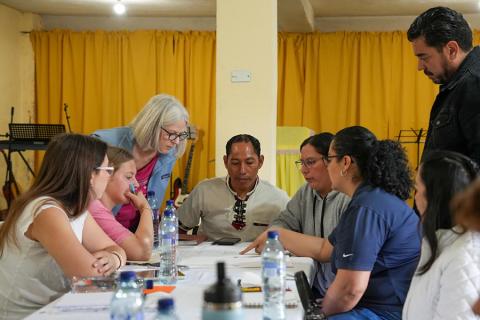
Future phases of the project will entail designing a new worship space and building new classrooms, ensuring the ministry can accommodate the growing community and its needs.
“This partnership connects the resources and knowledge we have with a community that has needs but also a vision for its own future,” Smith said. “It’s about empowering them to continue their own vision and ministry.”
Throughout the five-year timeframe, additional cohorts will join Baylor’s Nutrition Sciences and Interior Design programs, and under the guidance of faculty each will have an opportunity to integrate academic knowledge and skills into the project. Yet, it also serves a bigger purpose.
“It is participating in Gospel-oriented good—sometimes what we’re called to do is to just be the hands and feet of Christ,” Theriot said. “We were able to divide up responsibilities that align with our own giftings, so it really is a beautiful collaborative project amongst individuals and in the end it benefits people for the long term. We really appreciate that Baylor is providing us this opportunity to get to do that.”
ABOUT ROBBINS COLLEGE OF HEALTH AND HUMAN SCIENCES AT BAYLOR UNIVERSITY
Established in 2014, Robbins College of Health and Human Sciences seeks to enhance health, quality of life, and human flourishing for all individuals and communities through education, research, and innovation. It includes six academic departments—Communication Sciences and Disorders; Health, Human Performance, and Recreation; Human Sciences and Design; Occupational Therapy; Physical Therapy; and Public Health—along with the Division of Health Professions, which houses the Master of Physician Assistant Studies program. Robbins College offers 13 bachelor’s degrees, eight master’s degrees, and six doctoral degrees, as well as nine graduate programs in partnership with the U.S. Army. Graduate programs in Robbins College are offered in a variety of modalities, including on campus, online, and hybrid.