

Mentorship in Motion: Elevating Faculty Support for Graduate Students
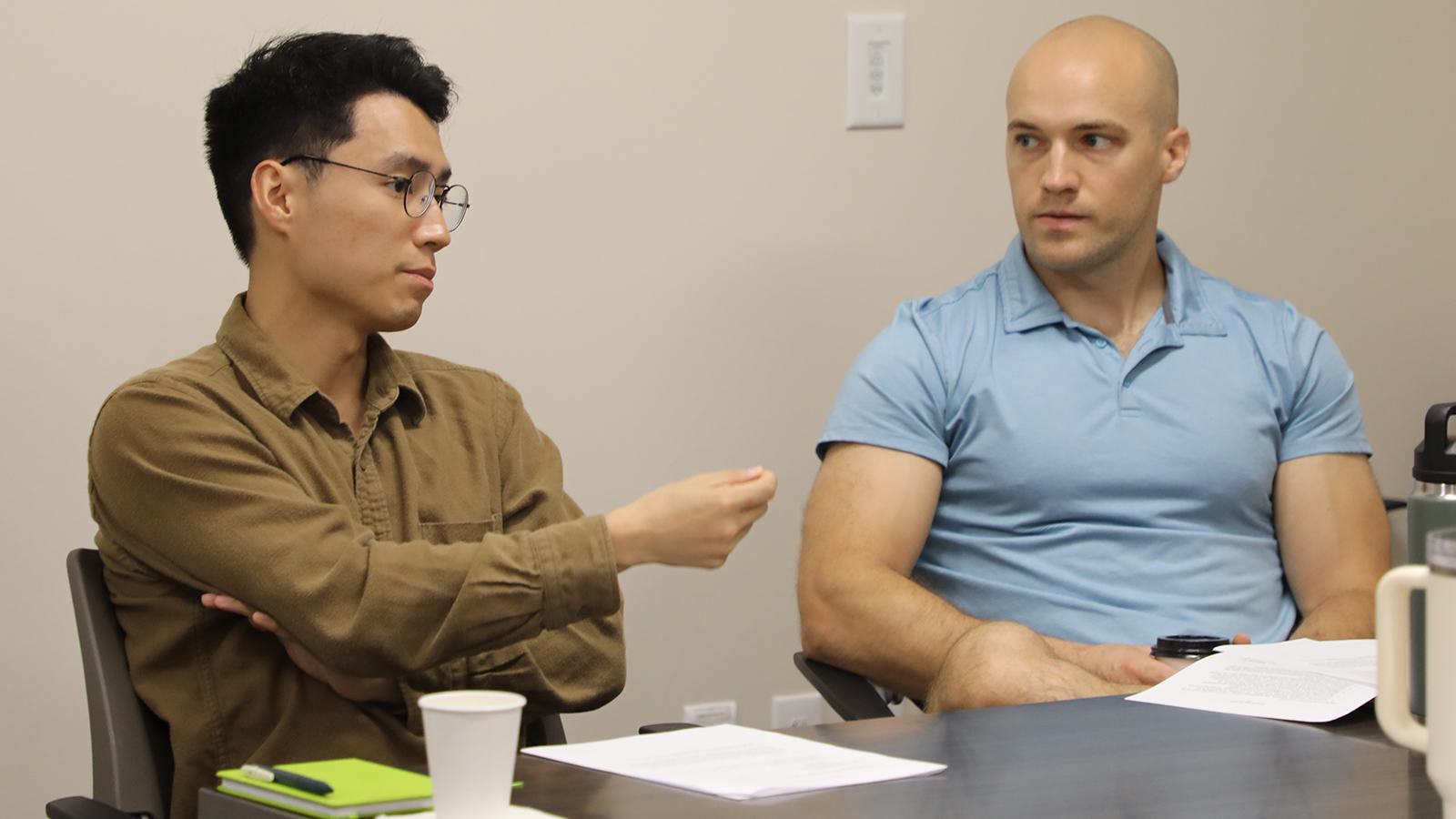
For graduate students working toward their master’s and doctoral degrees, the relationship with faculty is one key to a successful educational experience. These faculty mentorships help to create an environment in which graduate students can thrive academically, personally, and professionally. In an effort to better equip faculty with the skills necessary to foster mentor-mentee relationships, Baylor University’s Robbins College of Health and Human Sciences has partnered with the Baylor Graduate School to design and facilitate a pilot mentor training workshop.
Renée Umstattd Meyer, PhD, MCHES, FAAHB, Associate Dean for Research and Professor of Public Health in Robbins College, has worked to enhance mentorship training for faculty since entering her leadership role in 2020. To inform these efforts and learn evidence-based approaches to increase the capacity for research mentor trainings, she completed the facilitator training course through the Center for the Improvement of Mentored Experiences in Research (CIMER).
“Oftentimes, as mentors, we aren’t trained to be mentors,” Umstattd Meyer said. “We wanted to be able to offer the opportunity to our faculty to learn actual strategies, share tools, and build a network of support. The individuals who have completed this training made the deliberate choice to better themselves for the sake of their students.”
Over the past few years, the Graduate School has launched and offered mentorship workshops that include faculty across multiple disciplines. To expand on these efforts and with an interest in designing a program through a research lens, Umstattd Meyer partnered with Sara Dolan, PhD, Associate Dean for Professional Development in the Graduate School. The two, who had both attended CIMER training, came up with an idea to implement a cohort model for mentorship training—with a Robbins College cohort as the test subject.
“We wanted to see how going through this training with the same group of people—specifically, from the same college—would be different from previous trainings models and if it would help build trust better,” Umstattd Meyer said. “While Robbins College is very diverse in its fields of expertise, we are all from the same college, so faculty would have more similarities compared to those from different units across campus.”
The initial workshop, which utilized curriculum provided by CIMER, took place over two half days, each about four months apart. During this time, the Robbins College cohort participated in modules, fostered discussions, and reflected on how they put into practice what they learned. These evidence-based modules use a case discussion approach and focus on aligning expectations, maintaining effective communication, assessing understanding, promoting professional development and fostering independence, ensuring belonging, and infusing ethics. The results were positive, and Robbins College is considering the possibility of expanding training into a virtual format. In addition, the Graduate School began implementing the cohort model approach with other units across Baylor.
“By working closely with mentors, students develop knowledge and skills allowing them to develop and complete independent scholarship in their discipline by working closely with this faculty member,” Dolan said. “Over the last year, we have invested in our faculty mentors, and it has paid off.”
As of Fall 2025, 19 Robbins College faculty members have participated, with two cohorts completing the mentor training workshop. Daniel Kim, PhD, Assistant Professor for the Department of Communication Sciences and Disorders, appreciated the opportunity to participate in this style of training, which he said served as both a refresher and a meaningful learning experience.
“As someone who has benefited from excellent mentorship throughout my education, I deeply value the importance of strong and thoughtful mentoring in graduate student development,” Kim said. “One key takeaway for me was the importance of adapting mentoring approaches to the unique strengths, challenges, and goals of each student—there is no one-size-fits-all model, and this training reminded me that effective mentorship must be both intentional and personalized. Most importantly, mentorship is a personal relationship at its core, and it should be approached with care, mutual respect, and genuine empathy from both the mentor and the mentee.”
Cohort 1
- Gabriel A. Benavidez, Public Health
- Cory Dungan, Health, Human Performance, and Recreation
- Kathryn Janda-Thomte, Public Health
- Stephanie Jones, Public Health
- Elizabeth Kwon, Public Health
- Alison Prahl, Communication Sciences and Disorders
- Michaela Ritter, Communication Sciences and Disorders
- Cory Smith, Health, Human Performance, and Recreation
- Kelly R. Ylitalo, Public Health
- Yang-Soo Yoon, Communication Sciences and Disorders
Cohort 2
- Jeremy Bigalke, Health, Human Performance, and Recreation
- Leigh Greathouse, Human Sciences and Design
- Rebecca Jones-Antwi, Public Health
- Daniel Kim, Communication Sciences and Disorders
- Yunsuk Koh, Health, Human Performance, and Recreation
- Michelle Law, Human Sciences and Design
- Joon Y. Park, Health, Human Performance, and Recreation
- Savannah Rauschendorfer, Health, Human Performance, and Recreation
- Christopher J. Wynveen, Health, Human Performance, and Recreation
ABOUT ROBBINS COLLEGE OF HEALTH AND HUMAN SCIENCES AT BAYLOR UNIVERSITY
Established in 2014, Robbins College of Health and Human Sciences seeks to enhance health, quality of life, and human flourishing for all individuals and communities through education, research, and innovation. It includes six academic departments—Communication Sciences and Disorders; Health, Human Performance, and Recreation; Human Sciences and Design; Occupational Therapy; Physical Therapy; and Public Health—along with the Division of Health Professions, which houses the Master of Physician Assistant Studies program. Robbins College offers 13 bachelor’s degrees, eight master’s degrees, and six doctoral degrees, as well as nine graduate programs in partnership with the U.S. Army. Graduate programs in Robbins College are offered in a variety of modalities, including on campus, online, and hybrid.