

Investing in the Whole Person
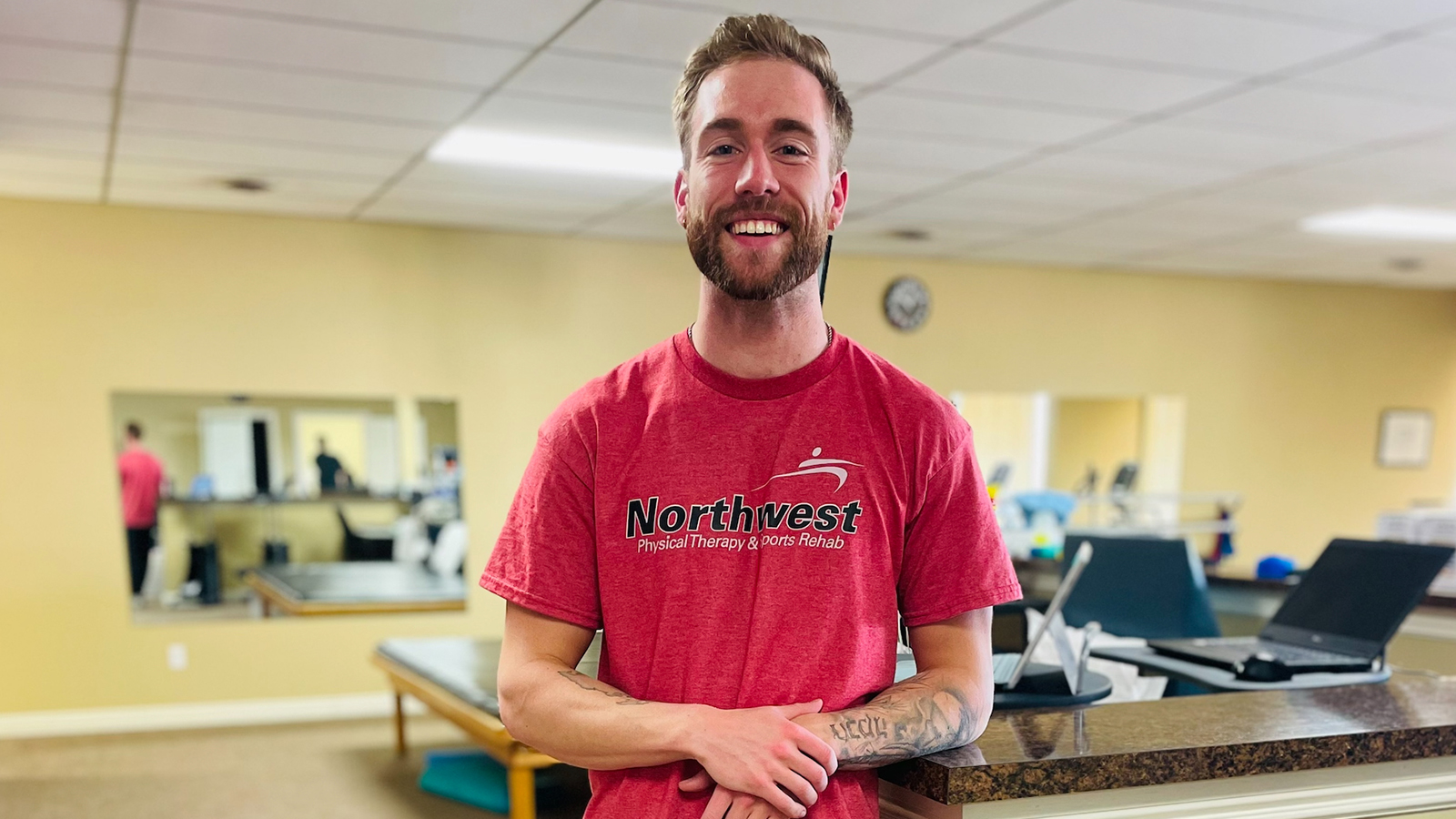
Ethan Torrance, a Baylor University Doctor of Physical Therapy (DPT) student, began his first clinical experience excited to work with young athletes. As a former college basketball player himself, he was inspired by his own experiences as a patient. However, Torrance soon found fulfillment in helping a completely different, and unexpected, population—geriatrics.
While working at a clinic in Woodward, Oklahoma, his perception of the physical therapy profession was deeply impacted by his senior patients. Many were living with pain, but as he worked one-on-one with them and formed connections, he witnessed a dramatic shift. With more therapy, their pain eased, and it was easier to move. They became happier, more engaged, and genuinely looked forward to their sessions.
“On my last day, they brought me homemade cupcakes and baked goods,” Torrance recalled. “That’s when I realized I had actually made a difference in their everyday lives—just in the 45 minutes I was able to see them in the clinic for a few weeks.”
Watching his patients improve and find greater fulfillment in their lives was deeply meaningful and added weight to his understanding of what physical therapists do.
“I went into this clinical rotation thinking, ‘I’m going to help all these athletes.’ But the most fulfilling part was working with people who, unless their pain was improving and they were moving better, they did not feel like life was fulfilling. They didn’t feel like they were succeeding in everyday life. But, after improving in therapy, they were so grateful. It made me feel good knowing that I’m genuinely helping this person live a better life,” he said.
In Baylor’s DPT program, clinical experiences begin after a year of didactic curriculum, including both online learning and periodic lab immersions to practice hands-on skills. This curriculum prepares Baylor DPT students for the second half of the program: clinical education. While these rotations in real-world settings and under the guidance of clinical instructors are meant to put classroom learning into practice, they are also meant to teach students about the profession in ways only in-person experiences can.
While he still plans to pursue sports therapy long-term, Torrance learned through his clinical rotation just how vital the emotional and social side of the profession can be—and that it is so much more than anatomy, movement science, and clinical reasoning.
“What we’re doing is so important beyond just getting people up and moving around again,” he said. “Sometimes we’re the only people that they get to talk to throughout the day. This experience opened my eyes to the depth of what we do as a profession. I don’t believe that you could have the same outcomes that you have when you invest in that person as a whole, not just as a body that has issues.”
Through a combination of online courses, in-person immersions, and on-site clinical experiences, Baylor DPT students are prepared to deliver compassionate, interdisciplinary, and patient-centered healthcare wherever they serve. As Torrance’s experience shows, improving someone’s quality of life and helping them find joy again, can be greatly fulfilling.
ABOUT ROBBINS COLLEGE OF HEALTH AND HUMAN SCIENCES AT BAYLOR UNIVERSITY
Established in 2014, Robbins College of Health and Human Sciences seeks to enhance health, quality of life, and human flourishing for all individuals and communities through education, research, and innovation. It includes six academic departments—Communication Sciences and Disorders; Health, Human Performance, and Recreation; Human Sciences and Design; Occupational Therapy; Physical Therapy; and Public Health—along with the Division of Health Professions, which houses the Master of Physician Assistant Studies program. Robbins College offers 13 bachelor’s degrees, eight master’s degrees, and six doctoral degrees, as well as nine graduate programs in partnership with the U.S. Army. Graduate programs in Robbins College are offered in a variety of modalities, including on campus, online, and hybrid.