

An Inside Look into Building Baylor’s Physician Assistant Studies Program
In May 2023, Baylor University’s Board of Regents approved the Master of Physician Assistant Studies (MPAS), to be housed in Robbins College of Health and Human Sciences. Two years later, the College is just months away from welcoming an inaugural cohort of 75 physician assistant (PA) students.
Baylor’s PA program will provide an innovative, career-focused education within a caring Christian community. The MPAS will be offered as a hybrid program, combining online learning, intensive on-site immersions, research curriculum, and Supervised Clinical Practice Experiences to create an accessible avenue of education for the next generation of PAs.
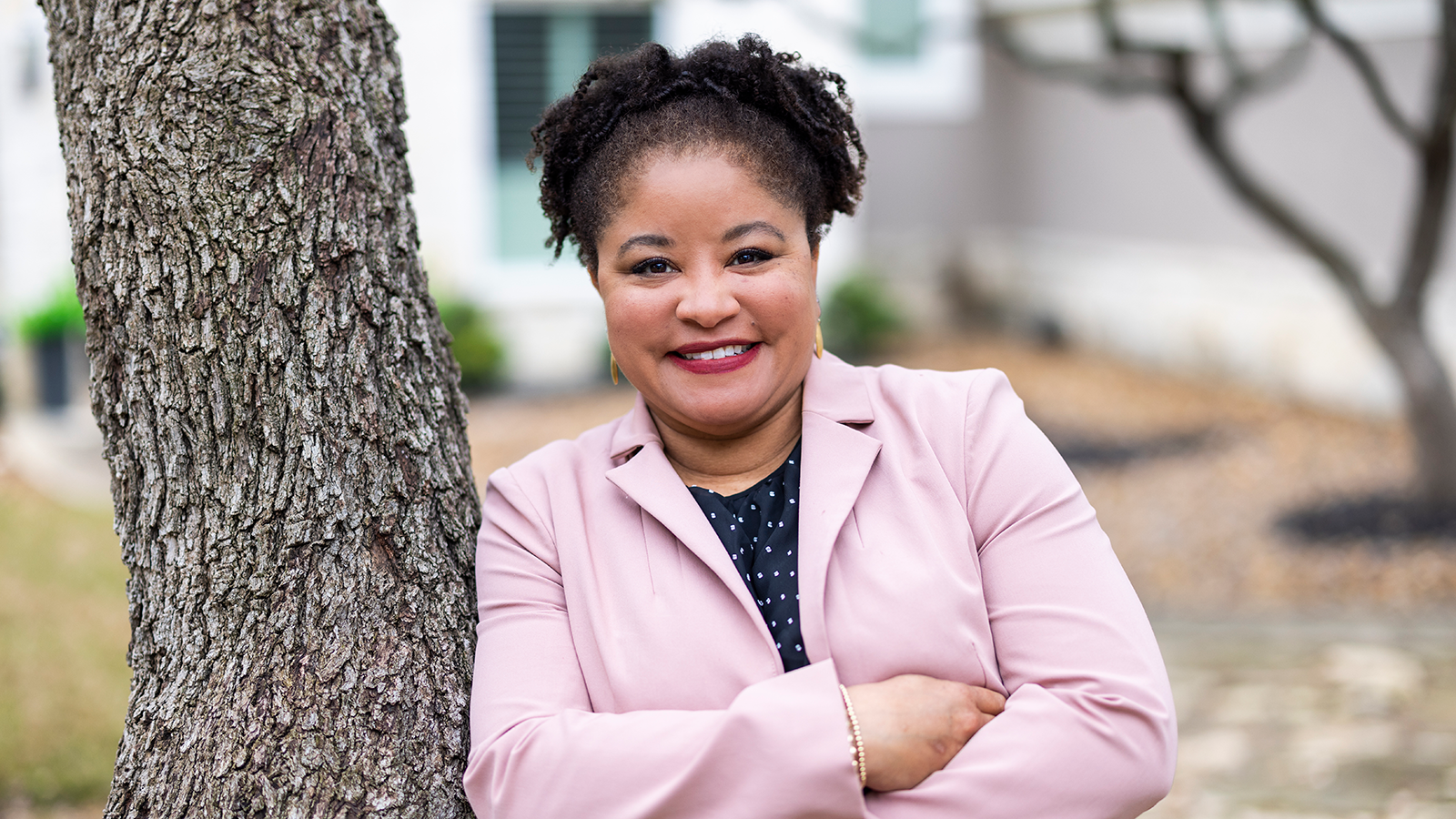
Inaugural Program Director Meredith Quinene, DHSc, MPAS, PA-C, DFAAPA, has worked tirelessly to bring the Baylor PA program to life. In this Q&A, Quinene shares an inside look at her journey in building the degree program, what makes Baylor stand apart from other PA programs, and her bold vision for the future.
“Our program design allows students to stay where they are and take care of whatever their responsibilities are that are keeping them in that location.”
Meredith Quinene, DHSc, MPAS, PA-C, DFAAPA
Tell us about your interest in and connection to Baylor.
I graduated from Baylor in 1998, with a Bachelor of Science in Education (cum laude), and then taught in public schools for three years before enrolling in PA school. My husband is also a Baylor Bear, along with my sister, and we’re a football family. We have season tickets and travel to Waco routinely for the games. In my interview for the program director position, they asked, “Why do you want to come to Baylor?” My answer was, “Baylor is home.” It’s where I grew up and it’s where I’ve always come back to. Even when I worked other places or lived other places, I always came back to Baylor.
Share a little about the PA profession and why Baylor should be entering this space.
The American Academy of Physician Associates defines a PA as a licensed clinician who practices medicine in every specialty and setting. You can find PAs in every state in the nation and almost every specialty that we have in medicine. It’s a very versatile and portable career.
Like much of the country, Texas is experiencing significant healthcare shortages—and it is especially evident in rural communities. With an increasing number of places where it is difficult to get in with healthcare providers, having PAs as clinicians to take care of patients can help fill some of that shortage. This increase in demand is why now is an ideal time for Baylor to launch this program.
What makes Baylor’s PA program unique?
Baylor is offering an innovative program that will be delivered in a hybrid model. During the preclinical phase of the curriculum, students can participate from wherever they live while coming to our Waco campus once a trimester for immersions, patient assessment, clinical skills, and more hands-on activities like anatomy and cadaver labs. We will also work hard to find each student a local clinical rotation site, again giving them the opportunity to stay home and in their community throughout their time in the program.
One of our goals is to make the Baylor program accessible to people who may not have the ability to move to another city to attend PA school. Our program design allows students to stay where they are and take care of whatever their responsibilities are that are keeping them in that location. But, even more, we hope people stay in their communities after graduation, to practice and provide healthcare in areas that may not have a sufficient number of providers.
What does it mean to have a PA program at a Christian university like Baylor?
It’s amazing to be able to bring Christianity into healthcare. I believe that every healthcare provider, whether they are Christian or not, needs to have a compassionate, caring demeanor toward patients. That’s why so many of us choose to enter the field—we want to take care of people. Being able to add a Christian perspective makes that care much deeper and richer.
We know that not all of our students are going to be Christian. They may not have a faith at all. But, if we can use our Christianity to instill love into our providers, regardless of where they are on their faith journey, I think that we are going to make better providers in the long run.
What are you most excited about as the inaugural PA cohort begins to take shape?
I am most excited about the hybrid nature of Baylor’s program. There are people in areas across our nation who would be fantastic providers for their community. However, like I said before, some just cannot move to attend a PA school. Our program is making PA education accessible to them, and we are going to try our best to keep our students where they are as much as possible. This means we are going to help educate future Baylor graduates across the nation—and they will not just be Baylor graduates and providers, but they will be leaders in their community. It is so important to be able to provide healthcare across our nation, not just concentrated right around PA schools—this is really what I’m most excited about.
Become a Baylor PA Preceptor! In order to optimize hands-on clinical experiences for our students, the Baylor PA program is looking to collaborate with healthcare professionals, especially Baylor graduates. As a preceptor, you will serve as a role model for the student and provide guidance and teaching during clinical rotations.
Baylor University has applied for Accreditation - Provisional from the Accreditation Review Commission on Education for the Physician Assistant (ARC-PA). Baylor University anticipates matriculating its first class in Fall 2025, pending achieving Accreditation - Provisional status at the June 2025 ARC-PA meeting. Accreditation - Provisional is an accreditation status granted when the plans and resource allocation, if fully implemented as planned, of a proposed program that has not yet enrolled students appear to demonstrate the program’s ability to meet the ARC-PA Standards or when a program holding accreditation-provisional status appears to demonstrate continued progress in complying with the Standards as it prepares for the graduation of the first class (cohort) of students.
ABOUT ROBBINS COLLEGE OF HEALTH AND HUMAN SCIENCES AT BAYLOR UNIVERSITY
Established in 2014, Robbins College of Health and Human Sciences seeks to enhance health, quality of life, and human flourishing for all individuals and communities through education, research, and innovation. It includes six academic departments—Communication Sciences and Disorders; Health, Human Performance, and Recreation; Human Sciences and Design; Occupational Therapy; Physical Therapy; and Public Health—along with the Division of Health Professions, which houses the Master of Physician Assistant Studies program. Robbins College offers 13 bachelor’s degrees, eight master’s degrees, and six doctoral degrees, as well as nine graduate programs in partnership with the U.S. Army. Graduate programs in Robbins College are offered in a variety of modalities, including on campus, online, and hybrid.