

Inaugural Baylor Public Health PhD Graduates Uplift Women’s Voices
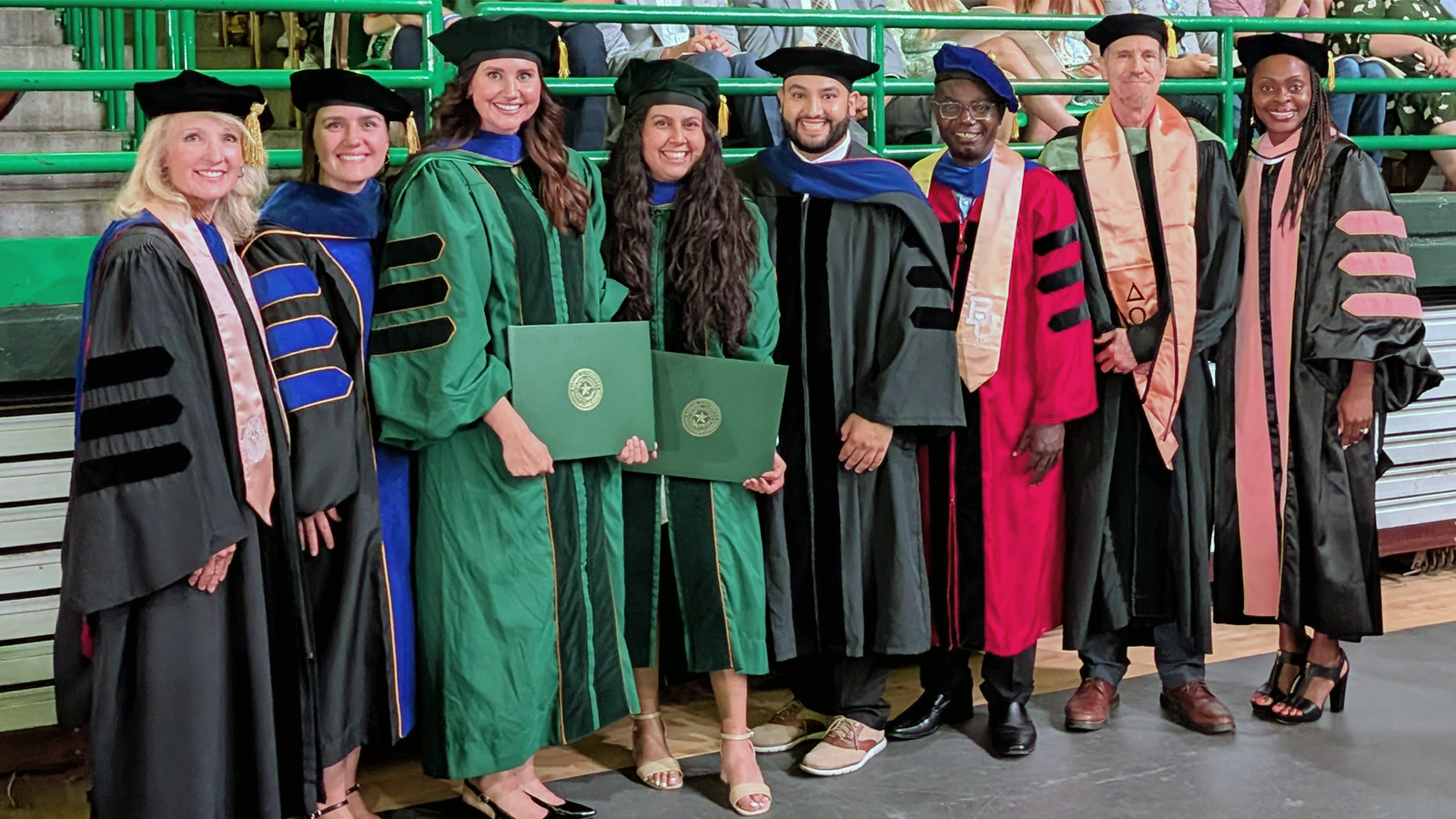
Baylor University’s August 2025 Commencement marks a major milestone for the Department of Public Health as its first PhD students—Anjelica Elizondo and Erin Young—graduate after defending their dissertations. Inspired by personal experiences, Elizondo and Young chose to focus their doctoral research on women’s health.
Blending Data and Dialogue
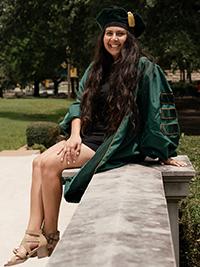
Elizondo was inspired to pursue a career in health after hearing about her mother’s struggles with medical care as a child. Her mother, the child of migrant farm workers, suffered a ruptured appendix but could not communicate well with doctors, and was sick with sepsis during a month-long hospital stay. These stories were deeply impactful for Elizondo, who understood that her mother’s experience could have been prevented and should not be accepted as standard care.
Inspired, when selecting a dissertation topic, Elizondo chose to focus on an issue close to her heart—the healthcare challenges faced by Latino and Hispanic communities. Her research analyzed access to care and social determinants of health for cervical cancer screening among Latinas in the Arizona, California, New Mexico, and Texas.
As an epidemiologist, Elizondo’s focus is unique and involved a mixed-methods approach to her research. Her mentor, Matt Asare, PhD, MPH, MBA, CHES, Associate Professor and Director of the MPH in Community Health Science program, assisted with qualitative components of her study such as focus groups and individual interviews. Elizondo paired this work with a quantitative component guided by Assistant Professor Gabriel A. Benavidez, PhD, who helped with statistical analysis and geospatial mapping of healthcare access in relation to community demographics.
“With the quantitative component, we can see the numbers of what’s happening and make some inferences, but I also wanted to better understand what is happening from women’s perspectives,” Elizondo shared.
The qualitative portion of her research revealed a complex set of factors influencing cervical cancer screening for Hispanic women, including knowledge gaps, fear regarding the screening, cost and insurance concerns, and clinic access preferences. She also noted generational differences, with younger women more willing to travel than older women.
Though it was a lot of work, Elizondo found the research process rewarding.
“I had the opportunity to build out the project, analyze the data, and come to my own conclusions. I also really enjoyed being able to speak with the women who lent their voices,” Elizondo said. “It was really enriching to give these women a place to voice subconscious thoughts that they were never able to fully articulate until you ask the question. That was rewarding in itself.”
Centering Women’s Voices
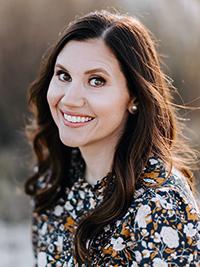
Young was drawn to the public health profession after witnessing gaps in maternal health. As a mom herself, she wanted to be equipped with the tools to advocate for women and mothers alike. Her dissertation explored what high-quality communication in maternal healthcare looks like, and through her research, she identified that women want shared decision-making with and informed consent from their healthcare providers.
“There should be a relationship where a woman and her provider work together as a team, and the woman is a full part of the conversation, understanding the why and how, as well as any risks, instead of being passive and doing whatever she is told to do,” Young explained.
Young conducted interviews and focus groups with women in Waco, Texas, asking what was important to them in maternal health communication. No matter the demographic, the responses were similar: they didn’t feel heard, weren’t given options, and often didn’t know what questions to ask due to lack of knowledge. To address these knowledge gaps, Young saw a clear role for public health.
“Doctors may not have the time for in-depth conversations with each patient, but community health educators within clinics could help fill that need,” Young said. “We can provide education and empower women to advocate for themselves.”
Young’s research recommends further inquiry. Next steps include developing an instrument to better assess these key features of communication, running an instrument survey, and asking how women in McLennan County feel about communication from their providers. Once an optimal form of communication is identified, trainings can be developed for women and providers.
“If women feel heard and respected during pregnancy, they’re more likely to seek care for their children,” Young said. “But when they feel ignored, they may skip appointments, missing the chance to catch potential complications.”
Her mentor, Beth A. Lanning, PhD, MCHES, Associate Chair, Professor, and Interim Director of the MPH in Epidemiology program, played a key role in Young’s PhD journey by helping her find her focus and providing encouragement.
“She trusted me to take my research in a direction that I felt inclined, interested, and inspired to pursue,” Young said. “I’ve been so grateful.”
Looking Forward
With their doctoral studies at Baylor complete, both Elizondo and Young plan to continue to teach and use their expertise to better their local communities.
Elizondo is returning home to San Antonio, Texas, where she will serve as Visiting Assistant Professor of Public Health at St. Mary’s University this fall. She plans to work on city initiatives related to social determinants of health for the Hispanic community, as well as launch a new pipeline program to inspire high school students to pursue careers in healthcare.
Young will continue to teach Maternal and Infant Health courses at Baylor, which she had done during her doctoral studies, and is excited to have additional time to develop the course now that her own studies are complete. Outside of the classroom, she plans to explore business ideas such as a mobile clinic to offer accessible support for mothers’ health needs.
ABOUT ROBBINS COLLEGE OF HEALTH AND HUMAN SCIENCES AT BAYLOR UNIVERSITY
Established in 2014, Robbins College of Health and Human Sciences seeks to enhance health, quality of life, and human flourishing for all individuals and communities through education, research, and innovation. It includes six academic departments—Communication Sciences and Disorders; Health, Human Performance, and Recreation; Human Sciences and Design; Occupational Therapy; Physical Therapy; and Public Health—along with the Division of Health Professions, which houses the Master of Physician Assistant Studies program. Robbins College offers 13 bachelor’s degrees, eight master’s degrees, and six doctoral degrees, as well as nine graduate programs in partnership with the U.S. Army. Graduate programs in Robbins College are offered in a variety of modalities, including on campus, online, and hybrid.