

Baylor Student Bridges Gap in Research on Female Physiology and Nutrition
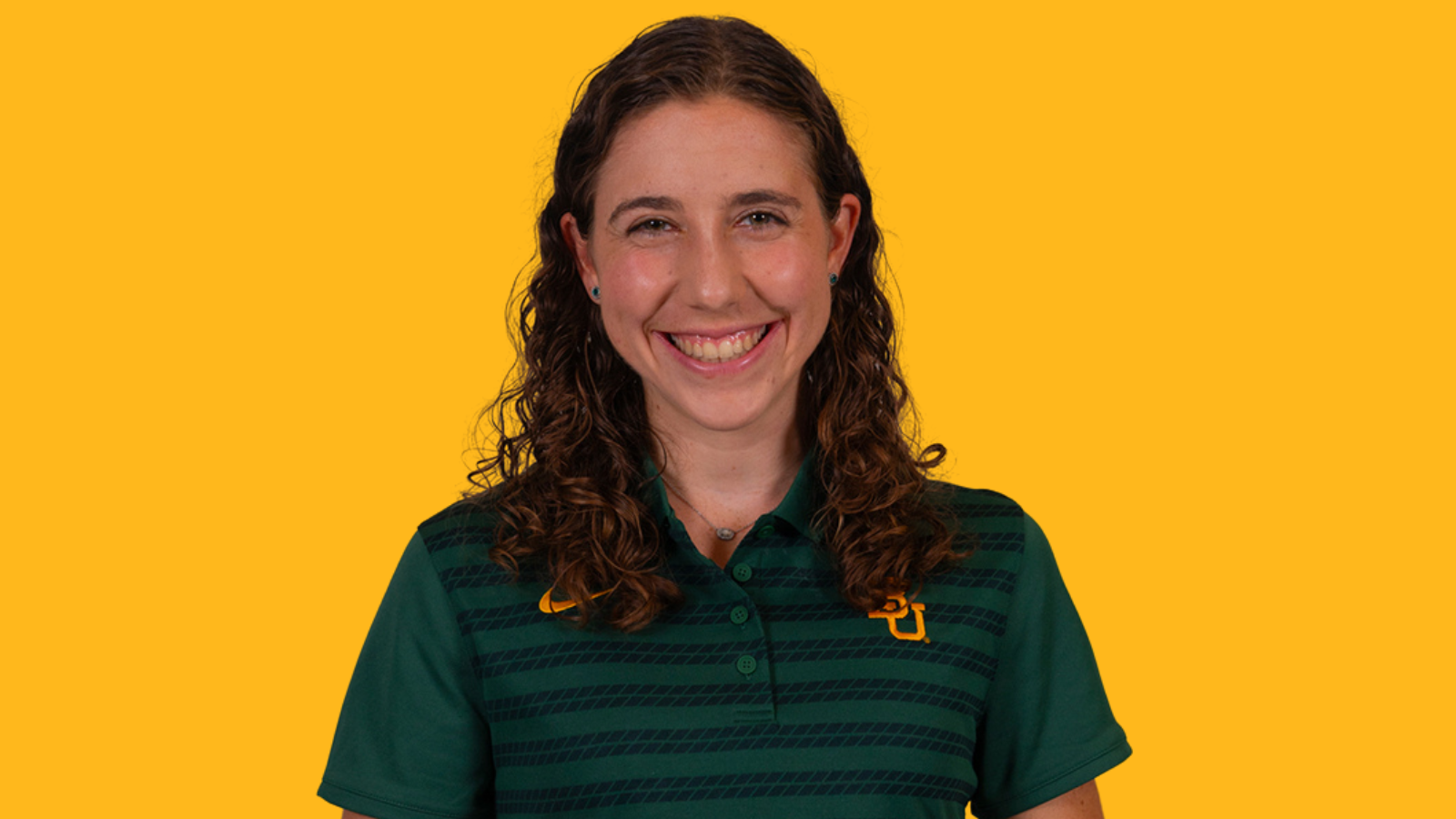
Cate Urbani, a Baylor University senior studying Exercise Physiology with a minor in Recreation Ministry, enjoys a deep love of learning and interest in female physiology and nutrition. This passion is prevalent in her multifaceted educational experience, ranging from her work as a volunteer research assistant to her next steps in pursuit of a graduate degree.
As a student athlete—participating on both the Baylor Track & Field team and the Baylor Cross Country team—Urbani has always had an interest in anatomy and physiology. Her undergraduate experience at Baylor further encouraged that passion, allowing her to dive deeper into research topics that she felt personal ties to. One of her favorite classes was Sport Psychology, taught by Andrew Meyer, PhD, Associate Professor for the Department of Health, Human Performance, and Recreation (HHPR).
“Sport Psychology intertwines the physical and mental sides of sports, and normally those are kept separate,” she said. “But we are complex species, and being able to understand those complexities was interesting.”
Urbani’s research interests tie into one of those large human complexities—athletes and nutrition. As a guest speaker in Meyer’s class, she presented on intentional and unintentional low energy availability, Relative Energy Deficiency in Sport (RED-S), and eating disorders in athletes. With extremely high rates of disordered eating in athletes of all sports, Urbani wants to shed light on the physiological and mental challenges that result from these diagnoses.
“These have affected me and affected a lot of fellow athletes—from middle school to elite athletes to older recreational athletes—so it’s something I want to give more insight on. I think for a while the culture was shifting toward more awareness, but recently, I feel like it’s been harder to fight the narrative on a broader scale,” she said.
Her focus on RED-S follows a recent increase in interest in the diagnosis over the last decade. Criteria for a diagnosis include a chronic mismatch between energy intake and energy expenditure. This leads to insufficient energy for physiological functions and impairment of various organ systems, including metabolic function, menstrual function, bone health, and immune function.
“I hope to research long-term consequences, such as mental, psychological, and physical effects overall and in males specifically,” she said. “There is little research specifically on males, who we know are greatly affected as well.”
While she wants to focus on RED-S effects in males, she is hoping to research female differences in training responses and recovery when it comes to running, as the usual principles are based on male anatomy. There is often a disproportionate gap between research on male and female physiology overall, and Urbani hopes her research can provide more insight to close that gap.
“We’re trying to do more applicable research for females, who are largely under-represented in medical research,” she explained. “With the menstrual cycle and hormone fluctuations, it’s harder to research females. Unfortunately, people have not been allocating time and resources in those areas.”
Urbani will continue this area of research at the University of Colorado at Colorado Springs, as she pursues a Master of Sciences in Applied Physiology, starting Fall 2025. While there, she will do research in its physiology lab on female-male differences, specifically about athletes, RED-S, and its impact on performance. Urbani has been accepted as one of only a few students in the program to be eligible to intern with athletes at the United States Olympic & Paralympic Training Center in Colorado Springs.
As graduation nears, Urbani reflects on her time at Baylor, noting that she has become emotional about leaving soon. Overall, the most standout part of her educational experience hasn’t just been research opportunities and compelling class subjects, but instead the strong connections with HHPR’s professors.
“I am going to miss the professors here,” she said. “They have invested in me, and their offices are always open. They have given me more than just an interest in my future career, but also life advice and encouragement.”
Some of that encouragement has included suggestions for Urbani to eventually pursue a PhD. While she has considered the idea, for now she wants to let life take its course. That said, she knows she has a passion for coaching, research, and volunteer work—and hopes to continue positively impacting others and contribute to valuable research in her endeavors in grad school.
ABOUT ROBBINS COLLEGE OF HEALTH AND HUMAN SCIENCES AT BAYLOR UNIVERSITY
Established in 2014, Robbins College of Health and Human Sciences seeks to enhance health, quality of life, and human flourishing for all individuals and communities through education, research, and innovation. It includes six academic departments—Communication Sciences and Disorders; Health, Human Performance, and Recreation; Human Sciences and Design; Occupational Therapy; Physical Therapy; and Public Health—along with the Division of Health Professions, which houses the Master of Physician Assistant Studies program. Robbins College offers 13 bachelor’s degrees, eight master’s degrees, and six doctoral degrees, as well as nine graduate programs in partnership with the U.S. Army. Graduate programs in Robbins College are offered in a variety of modalities, including on campus, online, and hybrid.